

In California, crops have been left unharvested as farmworkers stay home, fearful of immigration raids. Meanwhile, IRS employees in Kansas City are struggling to find desk space after being ordered back to the office following a remote work period. Adding to the uncertainty, tariffs are stalling hiring efforts across industries.
When President Donald Trump promised to support working-class voters, it was a pledge that resonated with many Americans. But now, with his policies taking shape, workers are feeling less secure. Immigration crackdowns, federal layoffs, funding cuts, and weakened labor protections have left workers struggling to do their jobs.
Economists say the impact of these policies is starting to show up in the numbers. The July jobs report, which revealed the weakest three months of job growth since the pandemic, alarmed Trump so much that he fired the head of the Bureau of Labor Statistics, the agency responsible for the report.
Harry Holzer, a Georgetown economist, points out that this period of uncertainty differs from past crises, such as the 2008 housing crash or the COVID-19 pandemic, because it’s self-inflicted. “All of this uncertainty has been created by Donald Trump and his fairly erratic economic policies,” Holzer said.
The Trump administration’s tactics have hit federal workers hard, with mass layoffs, hiring freezes, and deferred-resignation programs. Immigrants are also feeling the pinch from intensified deportation efforts. But the effects aren’t limited to these groups. From restaurants to factories to health care, workers across industries are operating in a constant state of fear.
The White House, however, maintains that Trump’s approach is focused on “prioritizing American workers,” according to spokesperson Taylor Rogers. He argued that Trump’s immigration enforcement and trade deals have encouraged businesses to hire U.S. workers at higher wages. Yet, the manufacturing sector has seen three consecutive months of job losses, and workers are being asked to do more with less.
In Michigan, workers at a Kraft Heinz plant are putting in longer hours after the Trump administration revoked the work visas of several immigrant co-workers. In the U.S. Forest Service, wildland firefighters are picking up extra duties to make up for cuts, even as fire season hits its peak. Meanwhile, over 150,000 federal workers are being paid to stay home, and that practice is set to end in September as part of Trump’s plan to shrink the federal workforce.
Certain industries are especially vulnerable. Construction sites, which rely heavily on immigrant labor, are facing delays and increased risks due to labor shortages. George Carrillo, of the Hispanic Construction Council, said, “You can’t afford to get hurt, and you have to work through the pain.”
The Trump administration’s move to rescind legal status for over a million immigrants is expected to make things worse in construction, hospitality, food, transportation, and health care, all industries dependent on immigrant labor.
Despite these challenges, Labor Secretary Lori Chavez-DeRemer pointed to supposed job gains for U.S.-born workers, though economists say her claims misread the data. David Cooper from the Economic Policy Institute explained that deporting immigrant workers can lead to job losses for native-born workers as well. “When you deport immigrant workers, native-born workers lose jobs as well,” Cooper said.
The Trump administration’s weakening of worker protections is another concern. The Equal Employment Opportunity Commission has lost its quorum, preventing it from fully enforcing workplace discrimination laws. Additionally, Trump’s cuts to the National Institute for Occupational Safety and Health have eliminated the team responsible for preventing heat-related deaths among farm and construction workers.
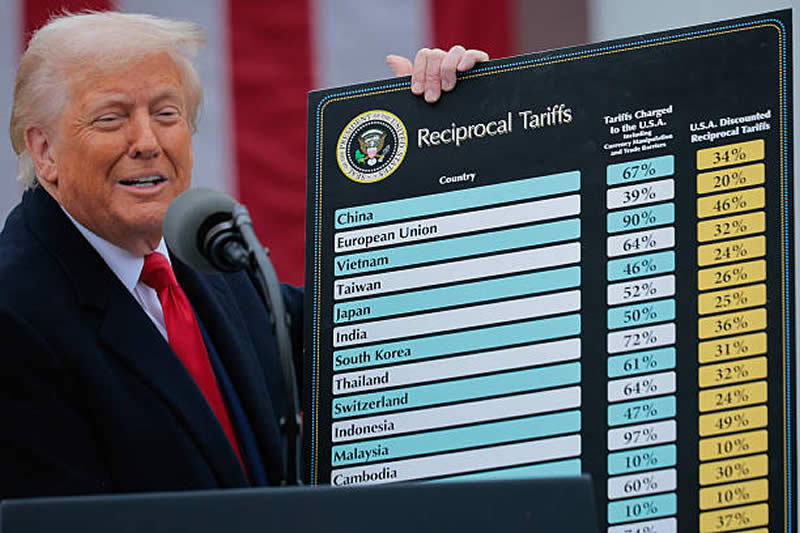
Economists and labor advocates are worried about the long-term impact of Trump’s tariff policies, especially on workers’ paychecks. The administration’s chaotic approach to trade deals is fostering uncertainty, with some questioning how much these policies will truly benefit workers.
For example, the “One Big Beautiful Bill” that Trump signed in July is expected to hurt the lowest-income households while providing benefits mainly to the wealthy. Cooper from the Economic Policy Institute called it “a transfer of money from the poorest households in America to the richest households in America.”
Trump’s policies may not show their full impact right away. Medicaid cuts in the “One Big Beautiful Bill” could lead to the loss of health care jobs, but won’t go into effect until after the 2026 midterms. That lingering uncertainty has labor experts feeling pessimistic about the future.
AFL-CIO’s Jody Calemine summed it up: “We are seeing a lot of [Trump’s] policies come home to roost in the labor market in a bad way.” He added that workers are “less free” than they were eight months ago and are worried about their rights and freedoms in the years to come.
More News:
- Florida mom busted for DUI after cops spot 5-year-old dangling out car window
- Miley Cyrus opens up about final conversation with godmother Dolly Parton before her death
- Indiana woman sentenced to 33 years for killing 17-month-old who wouldn’t stop crying
- Scott and Kelley Wolf confirm divorce after months of family healing
- Toddler found wandering Marietta streets after caregiver allegedly took 2 hours to raise alarm