

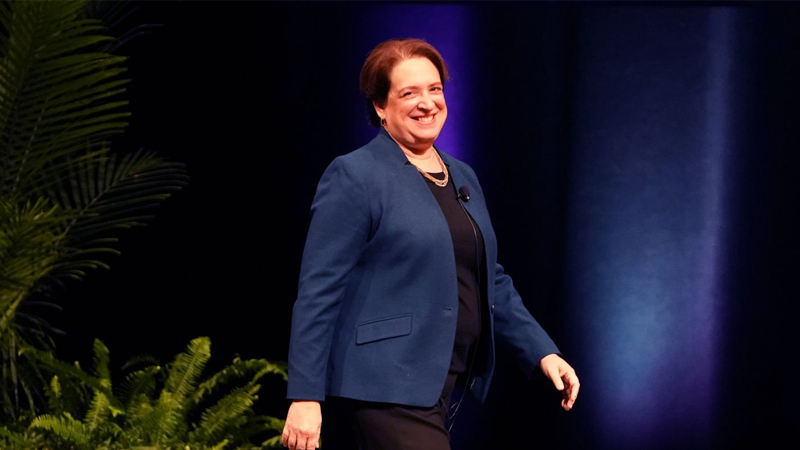
Former federal prosecutor Joyce Vance has praised Justice Elena Kagan’s dissent in a recent Supreme Court ruling on Temporary Protected Status, describing it as a forceful rebuke of the Court’s conservative majority.
In her Civil Discourse newsletter, Vance examined the Court’s 6-3 decision, written by Justice Samuel Alito. The majority held that courts cannot review a president’s decisions concerning Temporary Protected Status, commonly known as TPS.
The ruling allowed the Trump administration to move forward with ending protections for approximately 336,000 people who had been permitted to remain legally in the United States because of armed conflict, natural disasters or other dangerous conditions in their home countries. Those affected include people from Haiti and Syria.
Vance also pointed to the participation of Justice Amy Coney Barrett, who joined the majority. Barrett has two adopted children from Haiti, a detail Vance described as particularly notable in the context of a case affecting Haitian nationals.
Much of Vance’s analysis focused on allegations that the administration’s decision to end the protections was improperly influenced by race.
She argued that the majority’s dismissal of the available evidence was “so transparently in contravention of the facts” that the Court’s stated exception for constitutional claims may only “exist on paper” and have little practical effect.
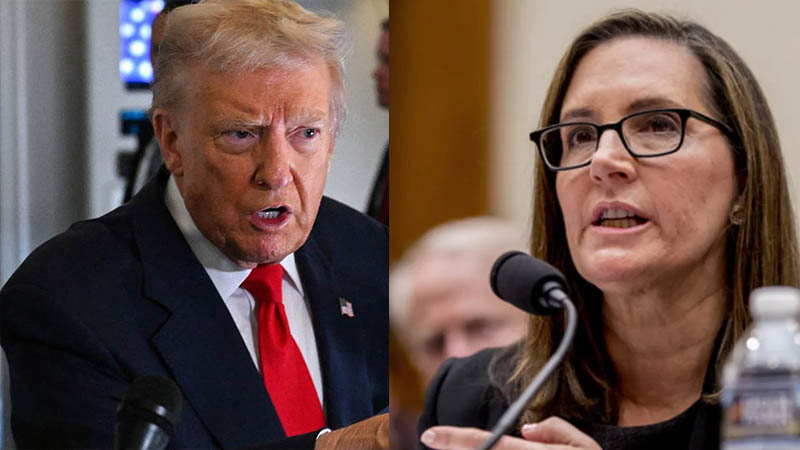
Vance reserved her strongest praise for Kagan’s dissent, which was joined by Justices Sonia Sotomayor and Ketanji Brown Jackson.
Kagan argued that evidence of racial motivation was “plain to see, in the President’s statements, which the majority (and for that matter, his own lawyers) cannot even bear to repeat.”
“Ouch,” Vance wrote.
Vance walked through the legal standard at issue, drawn from the 1977 case Arlington Heights v. Metropolitan Housing Development Corp., under which plaintiffs need only show that a discriminatory purpose was “a motivating factor” in the decision. She emphasized Kagan’s accounting of the remarks the majority declined to reproduce — including President Donald Trump’s claims about Haitians eating pets, his description of Haiti as a “s—hole country,” and his assertion that Haitian immigration was “like a death wish for our country” and “poisoning the blood” of the nation.
The dissent examined statements about Haiti and Haitian immigrants that Kagan said relied on racialized ideas.
According to Kagan, the references “of filth, disease, and primitiveness — are shot through with racial stereotypes and tropes.” She added that it was “hard to imagine the statements being made today of any White community.”
Vance highlighted another section of the dissent in which Kagan said the statements “fairly shout, in their racial undertones and overtones alike, that race entered into the President’s resolve to remove Haitians from this country.”
Vance argued that the majority disregarded those statements while giving the president greater authority over the fate of people who had been living legally in the United States under the TPS program.
Her analysis also focused on the practical consequences of the ruling for individuals covered by the protections.
Vance cited the case of plaintiff Fritz Emmanuel Lesly Miot, a Haitian national who has held Temporary Protected Status for 15 years. Miot works in a California laboratory conducting research into Alzheimer’s disease and also has Type 1 diabetes.

According to Vance, forcing Miot to return to Haiti could expose him to potentially fatal risks because of the severe deterioration of the country’s healthcare system.
Vance also warned readers against treating any possible Supreme Court ruling against Trump in a separate birthright citizenship case as evidence that the Court had firmly limited presidential power.
She described the effort to alter birthright citizenship as “boldly illegal” and said rejecting it would represent “a low bar for the Supreme Court to clear.”
Vance concluded by predicting that the TPS decision would eventually be remembered alongside some of the most heavily criticized rulings in the Court’s history, including Dred Scott and Korematsu.
She described that legacy as “a Supreme Court walk of shame.”