

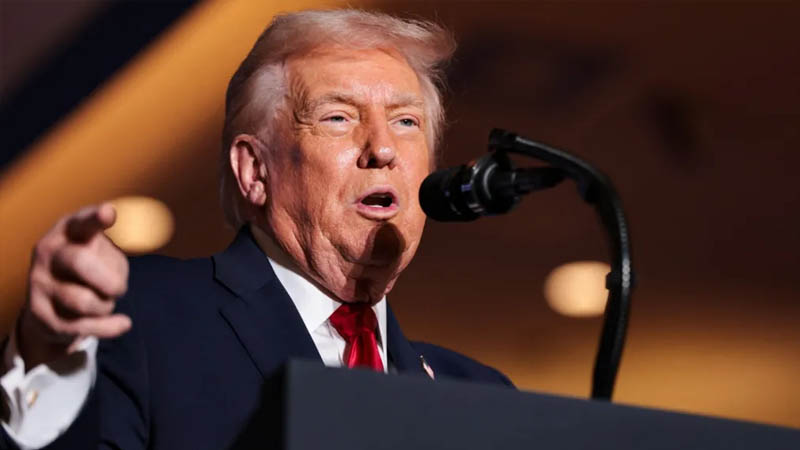
The U.S. dollar suffered its sharpest one-day decline in more than a year on Tuesday after President Donald Trump openly welcomed the currency’s weakness, a stance that caught markets off guard and accelerated a selloff already underway.
The dollar fell about 1.3%, its biggest daily slide since April of last year, after Trump declined to say the currency had dropped too far despite losing roughly 10% of its value over the past 12 months. His comments came during a visit to Iowa, where he was promoting his economic record and speaking with reporters.
Asked directly whether he was comfortable with the dollar’s current level, Trump offered a blunt response.
“I think it’s great,” he said, adding that the weaker dollar reflected strong business activity. Trump contrasted the current situation with past disputes involving foreign currencies, particularly the Japanese yen and the Chinese yuan, which he has long accused other countries of deliberately devaluing to gain a trade advantage.
Market reaction was swift. The U.S. Dollar Index, which measures the currency against six major trading partners, recorded its steepest single-day decline since April 10 of last year. That earlier plunge occurred amid escalating trade tensions and U.S. threats of massive tariffs on Chinese goods, a reminder of how sensitive currency markets are to political signals.
By the end of trading Tuesday, the dollar had also slipped to its lowest level since February 2022, underscoring growing investor concerns about policy direction and economic stability. While a weaker dollar can make U.S. exports more competitive abroad, it also raises import costs and can fuel inflation, an issue already weighing heavily on American households.
Currency analysts noted that Trump’s remarks reinforced fears that a softer dollar could be an intentional policy outcome rather than a temporary fluctuation. Even without direct intervention, presidential rhetoric alone can move markets by shaping expectations around trade, interest rates, and global economic relationships.
The selloff echoed across broader financial markets. When the dollar last saw a comparable drop in April 2024, major stock indexes also slid sharply, reflecting investor unease about escalating trade disputes. While Tuesday’s equity market reaction was more muted, traders said the currency move signaled deeper uncertainty.
Economists remain divided on whether a weaker dollar ultimately benefits the U.S. economy. Supporters argue it boosts exports and manufacturing, while critics warn it erodes purchasing power and undermines confidence in U.S. financial leadership.
For investors, the message was clear: policy signals from the White House still matter. Trump’s embrace of a falling dollar revived questions about how far markets may be pushed by rhetoric alone, especially as global currencies, trade balances, and inflation pressures remain tightly intertwined.
As the dollar continues to hover near multi-year lows, analysts say future comments from Trump and other senior officials will be closely scrutinized for clues about whether this slide is an accident of markets or a feature of policy.