

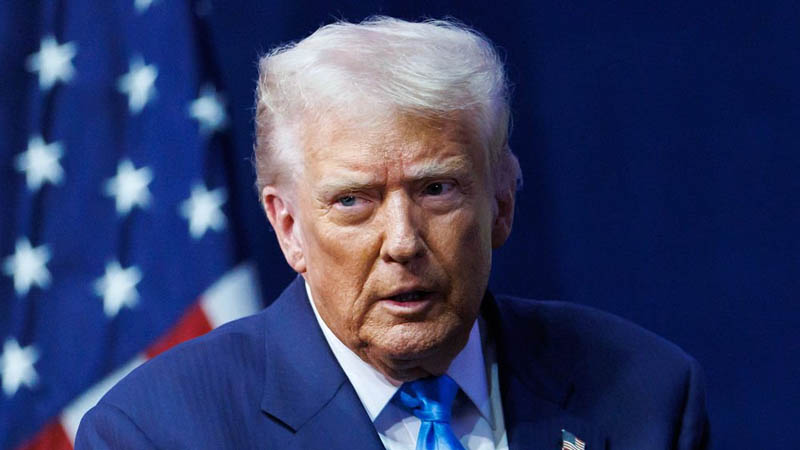
The Supreme Court is bringing new attention to President Donald Trump’s tariff policies, raising questions not just about trade but about the limits of presidential power. In an interview on Slate’s Amicus podcast with Dahlia Lithwick and Mark Joseph Stern, Marc Busch, the Karl F. Landegger Professor of International Business Diplomacy at Georgetown University, explained how the Court’s approach could reshape how tariffs are understood in the broader context of American governance.
“This case is so much bigger than trade,” Busch said. “This is a separation of powers case, and it deserves to be taken very seriously precisely because of that.” He noted that economic principles highlight how tariffs can function as a “power grab” by allowing the president to raise revenue without congressional approval.
Read Also: Greene denies Trump’s claim she drifted, says ‘I’m 100% America First’ and blasts GOP weakness
Busch emphasized that Trump never clearly outlined how tariffs were supposed to help American workers or the economy. The recent hearings made clear that the tariffs weren’t just a tool against foreign competitors such as China, Canada, or Mexico.
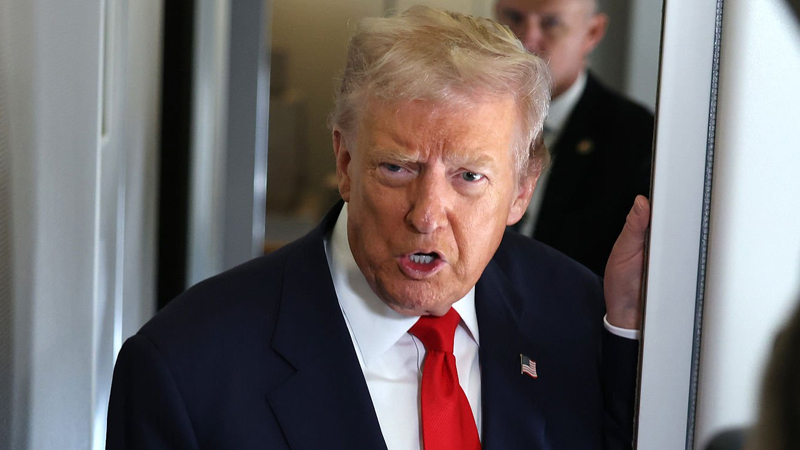
They also placed a burden on American companies themselves. “I was elated to hear that line of questioning, perhaps best articulated by Justice Sonia Sotomayor. What a relief to hear them utter that line: ‘Tariffs are taxes,’” he said.
The simple truth, Busch argued, is that tariffs act as taxes on U.S. businesses and consumers. “There’s no way to misunderstand these as anything other than what they are, which is as a tax that disproportionately hurts American manufacturers,” he said.
Read Also: Ex-Trump Aide Claims a “Hidden Epstein Connection” Behind Trump’s $130 Million Shutdown Donation
Because about half of U.S. imports are materials used to make other goods, the costs ripple through domestic industries. “This manufacturing renaissance that the administration likes to dangle in front of us is far-fetched because we’re handicapping precisely those that we wish to champion.”

Trump justified his tariffs under the International Emergency Economic Powers Act of 1977, which gives the president broad authority to regulate foreign-related economic activity in emergencies. But that argument, Busch noted, exposes a deeper constitutional issue about executive overreach.
“The one thing I haven’t heard in the media played up nearly enough was the logical conclusion of Solicitor General John Sauer’s argument,” Busch said. Sauer contended that Trump’s tariffs weren’t meant to raise revenue, but to push businesses to move production to the U.S. “He said…in the president’s ideal state of the world, there is no revenue collected…such that the tariff wall is irrelevant and not a revenue-raising mechanism,” Busch explained.