

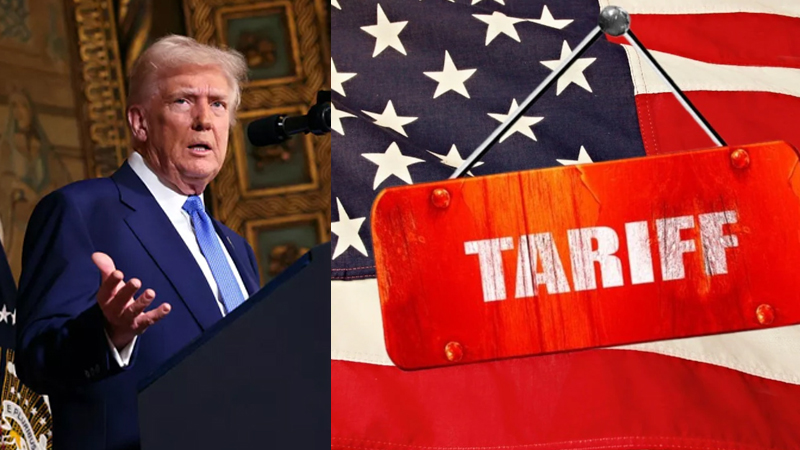
President Donald Trump is once again promoting the idea of sending Americans tariff rebate checks this year, suggesting they could be worth at least $2,000 per person. But there is growing uncertainty over whether he can legally authorize such payments without approval from Congress.
The proposal is not new. In July, Trump told Gray Media’s White House correspondent Jon Decker that revenue generated from his tariff policies could be returned directly to taxpayers. On Wednesday, in a follow-up conversation with Decker, Trump doubled down on that idea, saying he believes congressional approval may not be required.
Decker asked the president about comments from White House economic adviser Kevin Hassett, who previously said the decision would rest with Congress. “Kevin Hassett has said that those $2,000 tariff rebate checks would be up to Congress to decide whether or not to disperse that. Do you agree with Kevin Hassett? Or do you think you can do that unilaterally?” Decker asked.
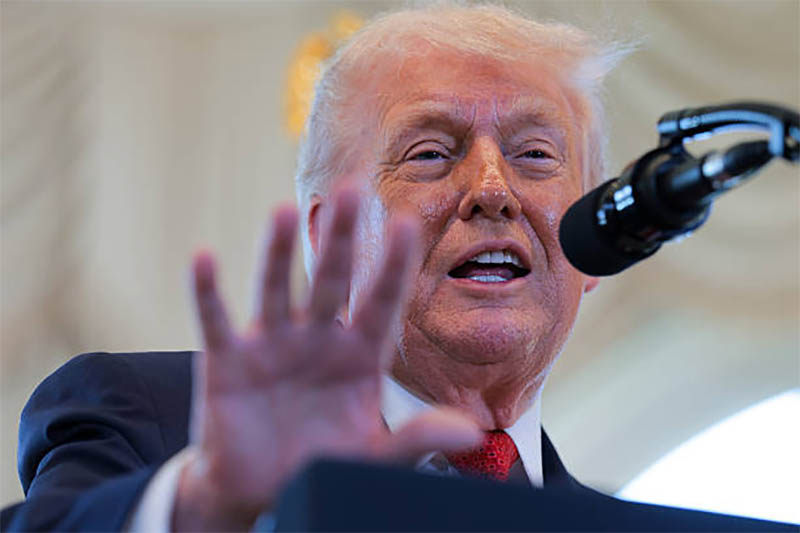
Trump responded, “I don’t think we would have to go to Congress out. But, you know, we’ll find out. The reason we’re even talking about it is that we have so much money coming in from tariffs that we’ll be able to issue at least a $2,000 dividend and pay down the country’s debt. But we’d do a $2,000 dividend to the people of our country, which would probably set a limit of, you know, income limit, where it made sense.
But, we will be able to make a very substantial dividend to the people of our country. I believe we can do that without Congress.” Those comments appear to conflict with what Hassett said just last month. At the time, the economic adviser stated that any rebate checks would “depend on what happens with Congress” and suggested the president would likely submit a formal proposal to lawmakers this year.
Historically, large-scale direct payments to Americans have required congressional authorization. During the COVID-19 pandemic in 2020, it was Congress that approved multiple rounds of stimulus checks. Similarly, after the 2008 financial crisis, Congress approved rebate payments under Barack Obama. Under the Constitution, Congress, and particularly the House of Representatives, holds the power of the purse, meaning federal spending generally must be authorized by legislation.
Several Republican senators have already expressed skepticism about the idea. Senate Majority Leader John Thune and others have said they would prefer that any additional tariff revenue be used to reduce the federal deficit rather than distributed as cash payments.
Trump continues to argue that tariffs are generating so much revenue that the government can afford to do both. Economists, however, often point out that tariffs are typically paid by importers, with much of the cost passed along to consumers in the form of higher prices, complicating claims about who ultimately benefits.
READ NEXT
- Kai Trump Faces Controversy for Taking Secret Service to Erewhon and Joking About ‘Bankruptcy’
- U.S. Sees Continued Decline in Smaller Farms, New USDA Data Shows
- New experiment shows chickpeas can grow in lunar soil on the moon for astronauts to grow their own food
- Adin Ross reveals plan to take legal action against TMZ after report on sister Madelyn’s death
- Man Who Voted for Trump says it was ‘Worst Decision’ after ICE Agents Drag him from Truck