

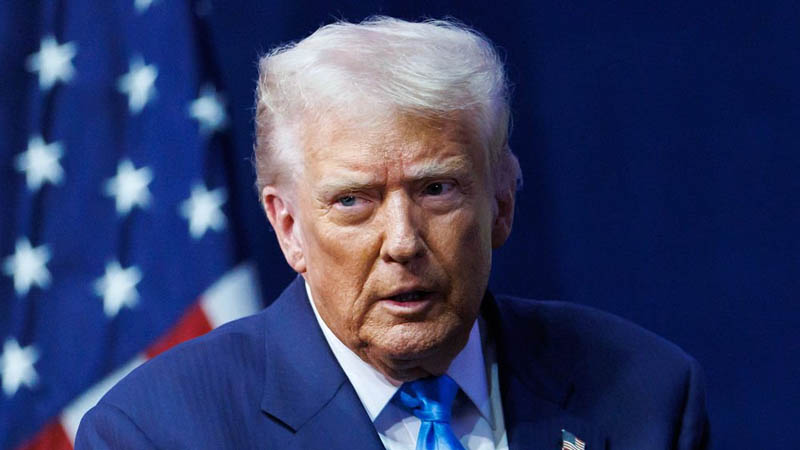
Farmers across the country are feeling the weight of trade policies that were supposed to help them but have instead created more uncertainty and cost. Eight months in, it’s still unclear whether the tariffs will actually lead to the homegrown food boom President Trump promised.
For small farms that sell directly into local markets, the damage hasn’t been as bad. But many are still struggling, especially as other Trump-era decisions—like cuts to food assistance programs—have slowed down farmers’ market sales. Experts say part of the problem is that the tariffs haven’t been applied in any consistent or targeted way.
Also Read: Farmers Sound Alarm as Tariff Talks Stall and Government Shutdown Hits Hard
At a recent press event, Chad Franke, president of the Rocky Mountain Farmers Union, spoke about what life is like for the 20,000 farm families his group represents across Colorado, New Mexico, and Wyoming, reported by Civil Eats. “The biggest impact that tariffs are currently having on agriculture in our region is the uncertainty,” he said. “Especially in drought-prone areas, ag producers have to make long-term plans for planting, conservation, and livestock.”
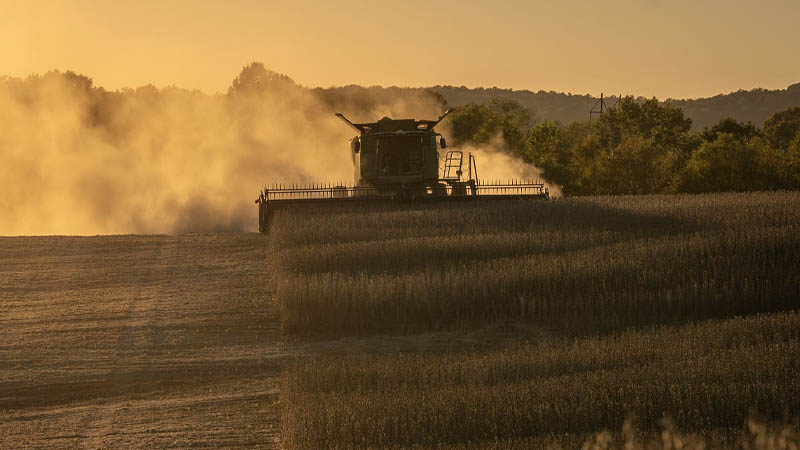
The anxiety isn’t just about the market. Franke said farmers are watching and waiting to see if other countries hit back with their own tariffs. Meanwhile, with soybeans sitting unsold in storage, there’s limited room for new crops. “One of the largest elevators around, I spoke to them recently, and they do have room, but it’s going to be tight,” he said. “They’re going to be piling corn outside, which is not abnormal, but they are going to be full.”
While prices for crops have fallen, the costs of farming have jumped. North Dakota State University data show tariff rates now topping 20 percent for some pesticides, close to 17 percent for fertilizer, and 16 percent for machinery.
The Trump administration promised to offset those losses through massive bailout payments. During his first term, the USDA paid farmers around $30 billion. But some say the process wasn’t fair. Carlson, a farmer in North Dakota, said the government used an “archaic formula” that left his state behind. An Environmental Working Group analysis found about a quarter of that money went to the largest 1 percent of farms.
Read More: Farmers react after Trump announces Plan to Boost Beef Imports from Argentina
“Typically, as farmers, we want to grow for a marketplace,” Carlson said. “We’re never going to have a situation where there’s just a free, fair, open market.”
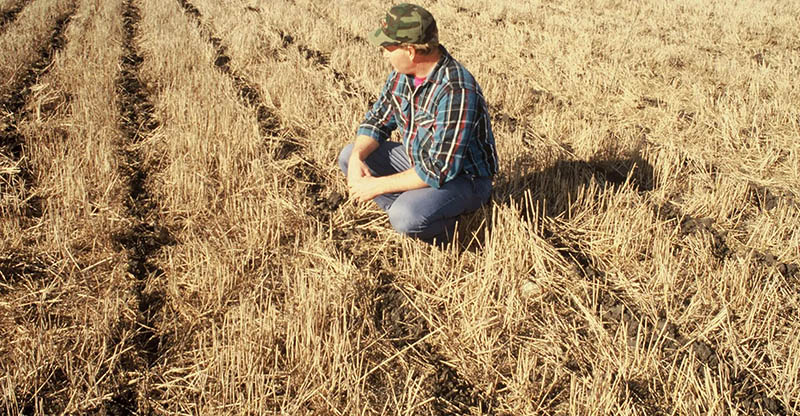
Now, another $10 billion bailout is reportedly on the way, though it’s been delayed by the government shutdown. Agriculture Secretary Brooke Rollins has promised renewed efforts to promote trade, including $285 million in trade promotion funding. But the USDA office overseeing those efforts has lost nearly 20 percent of its staff since 2017.
Karen Hansen-Kuhn, who leads trade and international strategies at the Institute for Agriculture and Trade Policy, said that short-term fixes like cash payments won’t solve the deeper issues. “We have this whole farm policy system that is built on overproduction of just a few crops. That system that depends so much on exports is really fragile,” she said.
Trump says the tariffs are meant to strengthen American agriculture, and many farmers support that goal. But groups like Farm Action argue the plan mostly benefits large corporations, raising prices for both farmers and consumers.
If the goal is to produce more food domestically, Farm Action suggests focusing tariffs on imported meats, fruits, and vegetables—while shifting federal support toward smaller, local farms. So far, the opposite has happened. Products from countries under the U.S.-Mexico-Canada Trade Agreement were exempt from tariffs, meaning imported produce still competes directly with American-grown goods.
And earlier this year, the USDA cut funding to several programs that support small, diverse farms. The decision to eliminate grants containing “DEI (diversity equity and inclusion)” language hit local produce and livestock operations especially hard.