

As the 2026 midterm elections draw closer, American voters appear increasingly focused on a single issue: the rising cost of living. That concern is now putting President Donald Trump’s aggressive tariff strategy under both political and legal strain, raising the likelihood that trade barriers could ease rather than escalate in the months ahead.
In a new report, Goldman Sachs chief US political economist Alec Phillips notes that affordability has become the “top issue of concern to voters.” According to polling cited in the report, 29% of voters now list the cost of living as their primary worry, up from 25% ahead of the 2024 presidential election. With midterms approaching in March, Phillips argues that political incentives are shifting rapidly.
Read Also: Deere Warns Trump Tariffs Are Hurting Farmers as Equipment Sales Slump
Using data from the prediction markets platform Kalshi, Phillips says Democrats are “much more likely” to regain the House majority next year. In that context, he adds, “The most obvious policy lever to pull would be tariff reductions.”
That outcome is far from guaranteed. The Trump administration continues to defend its tariff regime, even as senior officials acknowledge its limits. Treasury Secretary Scott Bessent recently described the tariffs as a “shrinking ice cube,” admitting he initially opposed them before changing his view when other countries entered negotiations.
Still, Democrats see political opportunity. Senate Minority Leader Chuck Schumer has reportedly urged his party to focus relentlessly on “affordability,” a message that resonated in off-year elections earlier this month. Candidates across the ideological spectrum leaned into the issue, reinforcing the sense that rising prices are reshaping the political landscape.
Read Also: “No Margin for Error”: Farmers Warn Trump’s Tariffs Could Cost Them a Generation
Economic data have added weight to that argument. Federal jobs growth weakened beginning in April, around the same time Trump announced a global “reciprocal tariff” plan he dubbed “Liberation Day.” While the longest federal government shutdown delayed reporting, later data revealed sluggish hiring and the highest unemployment rate in four years. The Bank of America Institute also found that small business profitability fell in November for the first time in 18 months, citing higher prices and hiring difficulties tied to tariffs.

Despite this, Trump has publicly dismissed affordability concerns, calling them a “hoax,” giving himself an “A-plus plus” on the economy, and scolding Americans in a December prime-time address for not appreciating what he called a strong economy.
Read Also: Don Jr. Gets Major Promotion From President Donald Trump
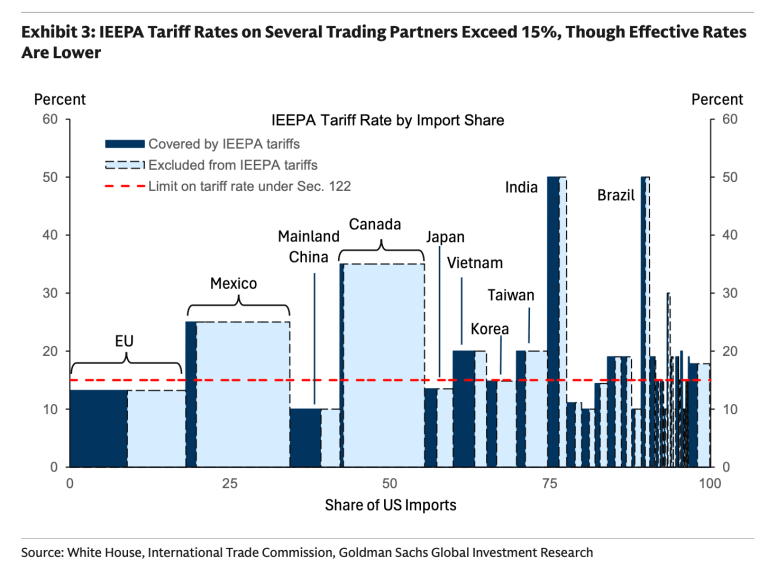
Legal pressure may ultimately force a shift. Goldman Sachs and other analysts expect the Supreme Court of the United States to rule early next year that many of Trump’s tariffs are illegal under the International Emergency Economic Powers Act. Oral arguments suggested the administration may have exceeded its authority, potentially invalidating a large share of existing tariffs.
Even if the White House seeks alternative legal paths, analysts expect limits. Temporary measures under the Trade Act of 1974 would cap tariffs at lower levels and shorter durations. As a result, Goldman projects the effective tariff rate could fall by about two percentage points by the end of 2026.
With voters restless, courts skeptical, and economic data flashing warning signs, the administration may be forced to ease its trade war. Whether Trump is willing to allow that retreat remains an open question.
READ NEXT
- 3 time Trump voter says ICE raids are hurting the construction industry ‘we never thought this would affect us’
- Florida deputy resigns after investigation reveals explicit content filmed in uniform
- Elon Musk faces risk of billions in damages after jury finds he misled Twitter investors in takeover deal
- Republican Gov. asked to leave restaurant after diners said her presence made them ‘uncomfortable’
- CBS News boss reportedly planning imminent layoffs of dozens of staffers