

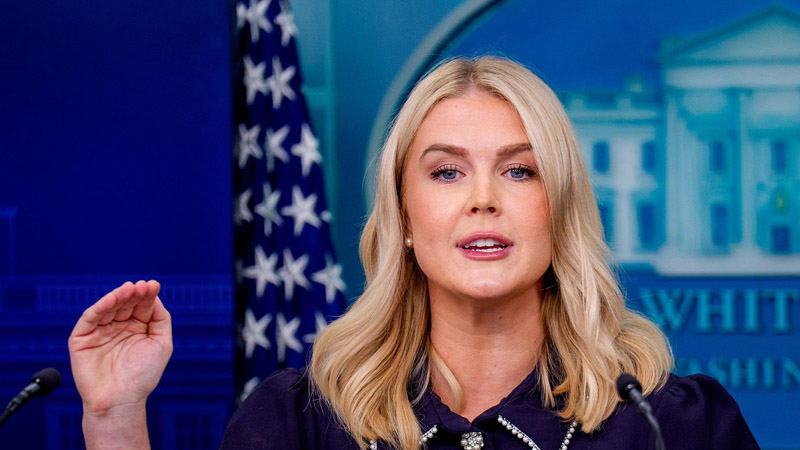
The White House is struggling to manage a growing list of verbal missteps from President Donald Trump, 79, with Press Secretary Karoline Leavitt, 27, often left to defend or deflect the incidents. On Monday, after declaring a “public safety emergency” to deploy troops against street crime in Washington, D.C., Trump twice told reporters he was “going to Russia on Friday.”
In reality, his upcoming meeting with Russian President Vladimir Putin will take place in Alaska. The president later corrected himself, saying he would not be leaving the United States for the summit.
Despite the correction, Leavitt declined to acknowledge the mistake. Instead, she suggested there might be diplomatic developments ahead. “Perhaps there are plans in the future to travel to Russia,” she told reporters on Tuesday.
This moment was the latest in a string of public mix-ups that have drawn attention. Last week, during a White House event with Apple CEO Tim Cook, Treasury Secretary Scott Bessent, and Commerce Secretary Howard Lutnick, Trump appeared to lose track of who was present.
“I’d like to welcome to the White House one of the great and most esteemed business leaders and geniuses and innovators anywhere in the world, Apple CEO Tim Cook,” Trump began. “Thanks as well to Treasury Secretary Scott Bessent and Commerce Secretary Howard Lutnick for being here, wherever you may be.”
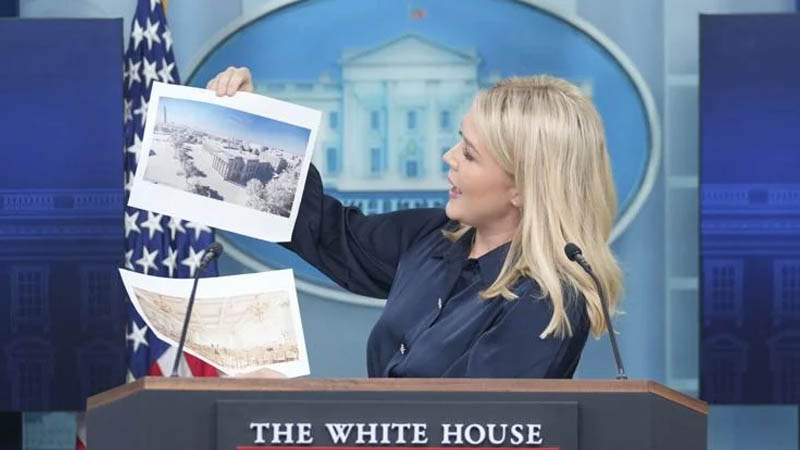
Lutnick, standing directly behind the president, quickly interjected: “I’m right behind you.” Trump turned, seemingly surprised. “Oh, hey, fellas. I missed you.”
Another slip came during the signing of an executive order related to the 2028 Summer Olympics. While introducing members of his Cabinet, Trump referred to Secretary of Homeland Security Kristi Noem—who was just feet away—as “Cristie Kerr,” the name of a professional golfer.
And on July 31, at a veterans’ bill signing with GOP Reps. Derrick Van Orden and Mike Bost, Trump paused mid-sentence to ask, “Where’s Derrick? Derrick?” Van Orden, standing right next to him, responded, “Right here.”
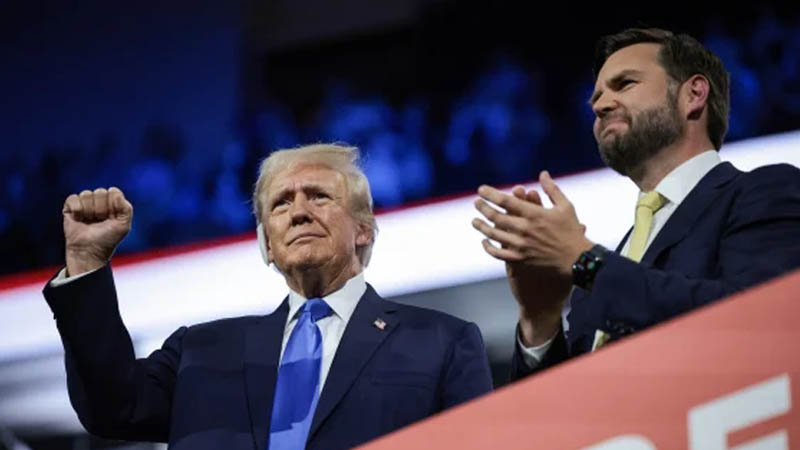
These repeated lapses have fueled questions about the president’s focus during public appearances. While his supporters often dismiss the incidents as harmless gaffes, critics argue they highlight a pattern of avoidable errors.
For now, the White House remains in a defensive posture, offering minimal acknowledgment of the mistakes while attempting to redirect attention to policy announcements and upcoming engagements. Whether these verbal stumbles will have political consequences remains to be seen, but they are clearly testing the administration’s ability to control the narrative.