

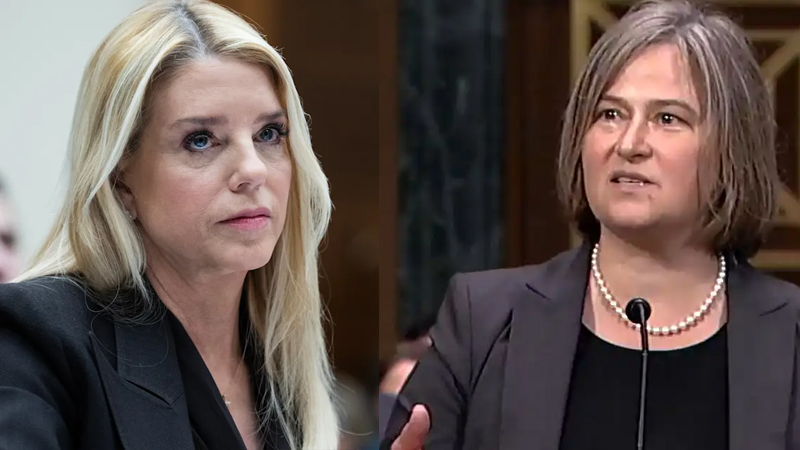
The Trump administration is challenging a federal judge’s decision to hold a government attorney in civil contempt, arguing that the ruling improperly targeted the lawyer in an effort to pressure immigration authorities to comply more quickly with a court order.
In a filing Monday with the 8th U.S. Circuit Court of Appeals, the Department of Justice said U.S. District Judge Laura Provinzino “wrongly” used her contempt authority against a Justice Department attorney in connection with a Minnesota habeas corpus case. The administration asked the appeals court to vacate the ruling, describing the judge’s action as “manifestly improper.”
Provinzino, who was appointed by former President Joe Biden, had earlier ordered the release of Rigoberto Soto Jimenez, a Mexican man who had been detained by Immigration and Customs Enforcement in El Paso, Texas. According to court records, Jimenez has lived in Minnesota since 2018 with his lawful permanent resident spouse.
The judge ruled in early February that Jimenez was being unlawfully detained and ordered his release and return to Minnesota. Although ICE released him from custody in Texas, the man reportedly did not have his Minnesota driver’s license or Mexican consulate identification with him, and he was not returned to the state.

More than a week passed without full compliance with the order. During a hearing on Feb. 18, Provinzino questioned special assistant U.S. attorney Matthew Isihara about why the government had not followed the directive.
Isihara, an Army Judge Advocate General’s Corps attorney temporarily assigned to the U.S. Attorney’s Office, apologized and said the issue had fallen “through the cracks.” He also noted that he had been handling roughly 130 cases in a single month while working in an office dealing with staffing challenges linked to Operation Metro Surge.
Following the hearing, the judge held Isihara in civil contempt and imposed a $500 daily “coercive fine” starting Feb. 20 until the government confirmed compliance with the court’s order.
However, the Justice Department noted that Isihara never paid any fines. One day after the order was issued, the government confirmed that Jimenez’s property had been returned, which effectively purged the contempt finding.
Even so, the DOJ argued the judge’s decision unfairly placed the attorney’s career at risk. According to the filing, Provinzino “held” Isihara’s career “captive” and subjected him to possible “permanent professional consequences” in an attempt to pressure federal agencies into acting faster.
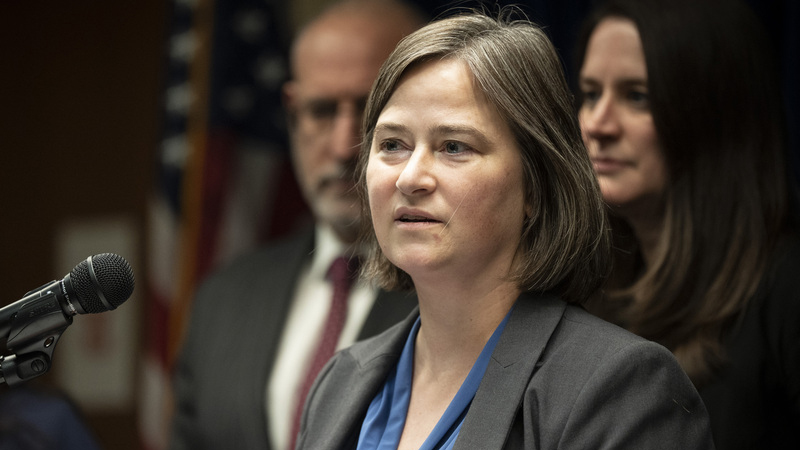
The Justice Department also said the situation left the attorney without meaningful control over the outcome. “A SAUSA in the District of Minnesota does not control ICE,” the filing stated.
In its appeal, the DOJ urged the 8th Circuit to prevent judges from using contempt sanctions against individual government lawyers in order to influence federal agencies.
“It would be entirely appropriate for this Court to exercise its supervisory authority to prevent district court judges from deploying personal-capacity contempt sanctions against government attorneys as a weapon to influence ICE or other agencies,” the filing said.
READ NEXT
- Kate Middleton reportedly fears for Archie and Lilibet’s security after school move despite royal rift
- Florida school worker, 80, accused of slapping girl, 9, in back of head after claiming she was “pushing other children”
- Estranged wife of Ken Paxton breaks silence on Senate race: “It’s not the people, it’s the seat”
- Meghan Markle preparing to respond “fiercely” if pushed into a corner, claim says
- Kentucky woman who crashed car into tree with 3 kids inside told police they “shouldn’t be stupid” about drinking