

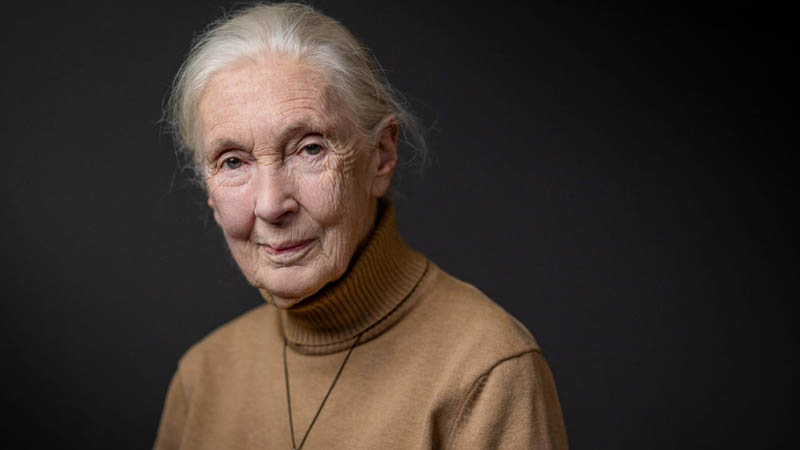
Dr. Jane Goodall, the renowned primatologist and conservationist, passed away at 91, leaving behind a legacy that changed how we understand both primates and our connection to the natural world. Known for her groundbreaking work with chimpanzees, Goodall’s influence as the founder of the Jane Goodall Institute (JGI) and a UN Messenger of Peace made her an iconic figure in the worlds of conservation and animal behavior.
Earlier this year, Dr. Goodall filmed an interview for a new Netflix documentary series titled Famous Last Words. The interview was meant to be released only after her death. Conducted by Emmy Award-winner Brad Falchuk, the conversation took place in March, in a confidential setting with cameras operated remotely. The footage was kept secure and unedited, ensuring the contents remained a private conversation between Goodall and Falchuk until now.
During the interview, Goodall looked back on her extraordinary life with her usual calmness and candidness, reflecting on everything from her early encounters with the fictional Tarzan character to her views on free will, arguments, and even spirituality. One of the most personal moments came when she shared thoughts she had never told even her own family. She discussed her regrets, her hopes for the afterlife, and who she wished to meet beyond this world.
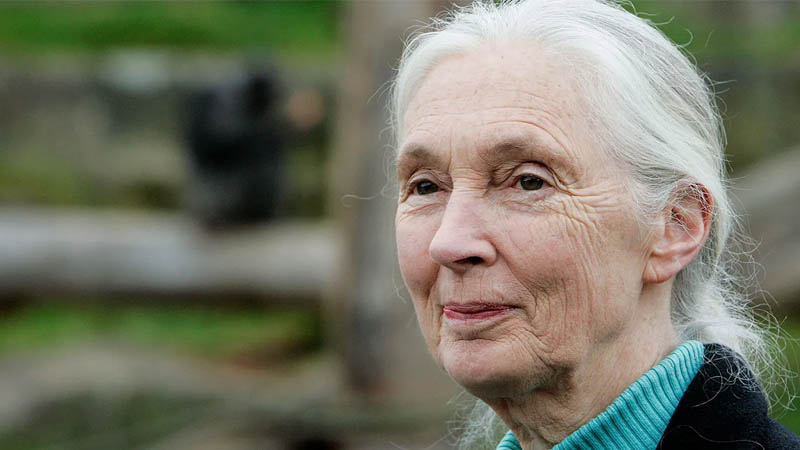
The conversation was intimate, with the two sharing a toast of whiskey, which Goodall humorously mentioned was good for her voice. When Falchuk left the stage, Goodall addressed the camera with her final, unfiltered thoughts for the world to hear. Here’s what she had to say:
“In the place where I am now, I look back over my life. I look back at the world I’ve left behind. What message do I want to leave? I want to make sure that you all understand that each and every one of you has a role to play. You may not know it, you may not find it, but your life matters, and you are here for a reason”.
“And I just hope that reason will become apparent as you live through your life. I want you to know that, whether or not you find that role that you’re supposed to play, your life does matter, and that every single day you live, you make a difference in the world. And you get to choose the difference that you make.

“I want you to understand that we are part of the natural world. And even today, when the planet is dark, there still is hope. Don’t lose hope. If you lose hope, you become apathetic and do nothing. And if you want to save what is still beautiful in this world — if you want to save the planet for the future generations, your grandchildren, their grandchildren — then think about the actions you take each day.
Because, multiplied a million, a billion times, even small actions will make for great change. I want to — I just hope that you understand that this life on Planet Earth isn’t the end. I believe, and now I know that there is life beyond death. That consciousness survives.
“I can’t tell you, from where I am, secrets that are not mine to share. I can’t tell you what you will find when you leave Planet Earth. But I want you to know that your life on Planet Earth will make some difference in the kind of life you find after you die. Above all, I want you to think about the fact that we are part — when we’re on Planet Earth — we are part of Mother Nature. We depend on Mother Nature for clean air, for water, for food, for clothing, for everything”.
“And as we destroy one ecosystem after another, as we create worse climate change, worse loss of diversity, we have to do everything in our power to make the world a better place for the children alive today, and for those that will follow. You have it in your power to make a difference. Don’t give up. There is a future for you. Do your best while you’re still on this beautiful Planet Earth that I look down upon from where I am now. God bless you all.”
Dr. Goodall’s words are a powerful reminder of the difference each person can make in the world. Through her life’s work, she showed us how much our actions matter, and how we are all connected to the planet and its future.