

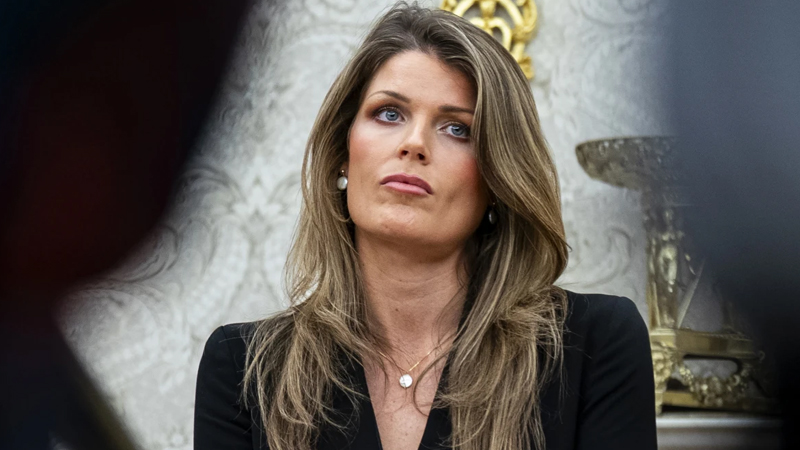
Lindsey Halligan has resigned from her position as the top federal prosecutor in Eastern Virginia after a blistering rebuke from the bench and growing scrutiny over her continued use of the U.S. Attorney title despite court rulings questioning the legality of her appointment.
Attorney General Pam Bondi announced Halligan’s departure just hours after U.S. District Judge David Novak sharply criticized her conduct in a court order. The judge said Halligan’s defense of her title “contains a level of vitriol more appropriate for a cable news talk show and falls far beneath the level of advocacy expected from litigants in this Court, particularly the Department of Justice.”
Read Also: Lindsey Halligan’s Early Moves as Virginia’s Top Federal Prosecutor Raise Questions
Novak warned that Halligan’s continued claim to the role of U.S. Attorney for the Eastern District of Virginia “ignores a binding court order” and could expose her to disciplinary consequences. He wrote that she has “no legal basis” to continue the “charade” and added, “This charade of Ms. Halligan masquerading as the United States Attorney for this District in direct defiance of binding court orders must come to an end.”
Halligan responded Tuesday night with a brief statement saying her 120-day interim appointment “concluded” January 20. The controversy stems from Halligan’s appointment as interim U.S. Attorney after President Trump nominated her following the removal of her predecessor.
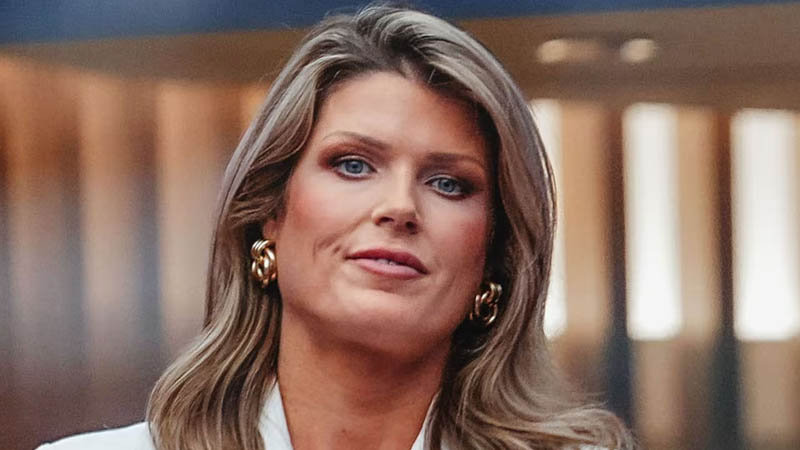
That predecessor had resisted pressure to prosecute former FBI Director James Comey and New York Attorney General Letitia James. Shortly after taking office, Halligan brought indictments against both. Federal judges dismissed the cases and later ruled that Halligan was unlawfully serving in the role because her interim term had exceeded the 120-day limit.
Judge Cameron McGowan Currie previously ruled that, because Halligan remained in office beyond the allowed period, “all actions flowing from Ms. Halligan’s defective appointment,” including the prosecutions of Comey and James, “were unlawful exercises of executive power and are hereby set aside.”
Despite that ruling, the Justice Department defended Halligan’s status. In court filings signed by Halligan and senior DOJ officials, the department insisted, “Ms. Halligan is the United States Attorney,” and argued that she had not “misrepresented” anything. Officials added, “The bottom line is that Ms. Halligan has not ‘misrepresented’ anything and the Court is flat wrong to suggest that any change to the Government’s signature block is warranted in this or any other case.”
Trump has formally nominated Halligan for the position, and the Senate Judiciary Committee is reviewing her nomination. White House press secretary Karoline Leavitt previously said, “She’s the President’s nominee,” adding that the administration hopes she will be confirmed.
Halligan’s situation is not unique. Judges across several districts have ruled that multiple Trump-appointed U.S. attorneys were serving unlawfully after their interim terms expired. Among them was Alina Habba, another former Trump attorney, who stepped down as U.S. Attorney for New Jersey and later took on a role as a “senior adviser” to Bondi. Courts have reached similar conclusions in New York, Nevada, and Los Angeles, underscoring a broader legal clash over how far the administration can stretch interim appointments without Senate confirmation.
READ NEXT
- Kai Trump Faces Controversy for Taking Secret Service to Erewhon and Joking About ‘Bankruptcy’
- U.S. Sees Continued Decline in Smaller Farms, New USDA Data Shows
- New experiment shows chickpeas can grow in lunar soil on the moon for astronauts to grow their own food
- Adin Ross reveals plan to take legal action against TMZ after report on sister Madelyn’s death
- Man Who Voted for Trump says it was ‘Worst Decision’ after ICE Agents Drag him from Truck