

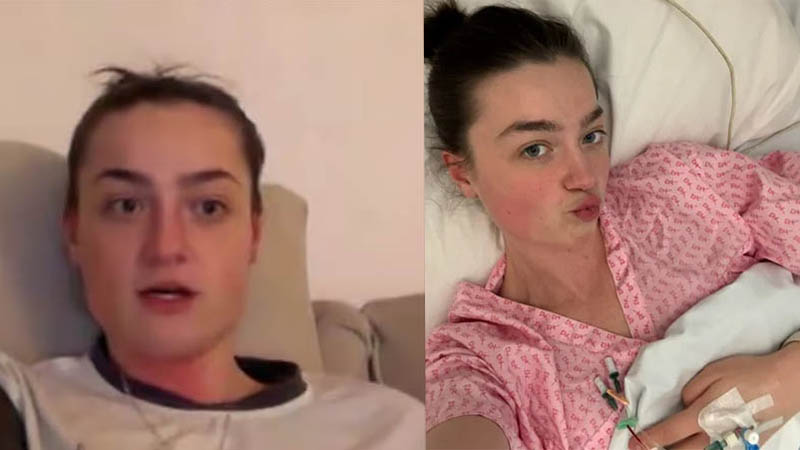
When the pain finally eased enough to stand, Alice picked herself up, unlocked the toilet door and walked back onto the office floor. To everyone else, nothing had happened. She didn’t tell her colleagues a thing. In her head, they would not understand anyway.
Like one in 10 women, Alice has endometriosis, a condition where tissue similar to the womb lining grows elsewhere in the body. It can cause severe pain and affects sex, fertility, mental health and work. Research shows those with the condition earn around £130 less per month on average, and one in six end up leaving their careers altogether.
Alice says the guilt of taking time off became overwhelming. ‘I’ve had to quit every role I’ve been in, four in total, until my current admin position,’ the 25 year old tells Metro.
Nicole Bowler, 24, was diagnosed last year and says her career plans have also been derailed. She has just deferred her teacher training for a year after struggling to balance study, work and her health. ‘Being financially independent and having a job gave me purpose, so I’ve lost a lot of self worth,’ she reportedly said. ‘Having so much taken out of my control has been extremely distressing.’
Along with others, Alice and Nicole are now pushing for menstrual leave in the UK for people with endometriosis or adenomyosis, a similar condition. A petition calling for three extra days of paid sick leave per month has reached 74,000 signatures.

The government responded in August, saying it understands the conditions cause ‘difficulty and pain’, but argues the Equality Act 2010 already offers enough protection. In its response, it said: ‘Endometriosis and adenomyosis can be classified as disabilities, and individuals with a disability are protected from discrimination, and their employer is required to make reasonable adjustments.’
Nicole says it has never felt that way for her. She recalls struggling from her very first ‘heavy, painful and tiring’ period at 13. At the time, she was training as a competitive swimmer for up to 26 hours a week.
‘On one residential swimming trip, I had to sit out of all the activities for three days, because I couldn’t go 45 minutes without having to change a super heavy tampon,’ she says. ‘I was so embarrassed when blood started dripping down my legs.’
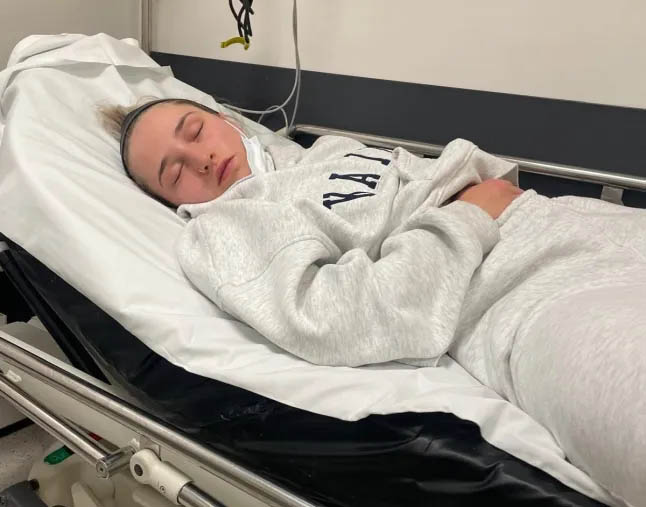
She began avoiding training, particularly with male coaches, before eventually leaving the sport. When stabbing pains started at 14, a male GP dismissed her symptoms as ‘part of being a woman’, even joking that ‘girls will do anything to get out of sport’.
Years of appointments followed, with no answers. ‘I was thinking “Is it just me? Am I just being dramatic?” because I was constantly told this is normal,’ Nicole says. ‘I get so down about everything.’
Alice had similar experiences, with extreme pain and bleeding leaving her exhausted. ‘I’d leak through my tampon, pad, knickers and leggings in an hour,’ she says. ‘I’ve had to miss school growing up, and work as I’ve got older.’
Endometriosis takes around nine years to diagnose on average, as it can only be confirmed through surgery. Both women waited around a decade for answers. After Nicole’s surgery, her workplace refused phased returns or adjustments. ‘Not being able to work and being made to feel dramatic knocked my confidence,’ she says.
Now facing chronic pain and fatigue, Nicole believes menstrual leave would ‘take some of the stress away’. ‘It would finally acknowledge that it’s a painful, inflammatory, full body, incurable disease, rather than just the time of the month,’ she says.
If the petition reaches 100,000 signatures, it must be debated in parliament. ‘So many women suffer with this,’ Alice says. ‘Endometriosis is never going to be easy to live with, but it doesn’t have to be as hard as it is now.’