

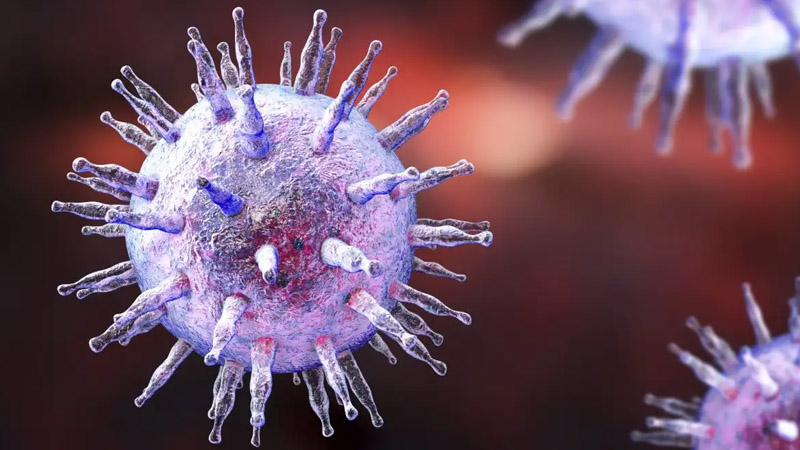
A virus has stopped pancreatic cancer in its tracks in three people in a clinical trial in the US. Further evaluation is needed in larger trials, but the early results are encouraging, especially since only small doses of the virus were administered for initial safety testing.
“We only injected one-tenth of the dose we are eventually aiming at, so the efficacy is better than I expected, especially as this is pancreatic cancer,” says Masato Yamamoto at the University of Minnesota, who led the development of the viral treatment.
Pancreatic cancer is notorious for being the deadliest type of cancer. One reason is that symptoms tend to appear late, when the cancer has already spread and cannot be surgically removed. Once diagnosed, people usually live only about 3 to 6 months.
Another reason is that pancreatic tumors have tough, fibrous exteriors that block chemotherapy drugs from getting in. “They’re hard as hockey pucks,” says Yamamoto. Immunotherapies that boost immune activity against cancer are also ineffective because pancreatic tumors can hide from the immune system.
The first patient in the trial, who had a pancreatic tumor 7 centimeters across, was administered the treatment a year ago, and the other two have been since then. At the time, their tumors hadn’t spread beyond the pancreas. Since being treated, their tumors haven’t grown any further.
“They are all still alive and have clinically stable disease,” says Yamamoto, who presented the results at the annual meeting of the American Society of Gene and Cell Therapy in Boston, Massachusetts, earlier this month. Another 15 patients will now receive higher doses to determine the optimal level.
“I think this is an interesting early signal, but as a pancreatic surgeon, I think it’s important to keep perspective,” says Kai Brown at Royal North Shore Hospital in Sydney. “The history of oncology is littered with promising early signals that vanished by the time rigorous phase III [late-stage] testing was done, so I think these preliminary conference results should probably just be seen as hypothesis-generating at this stage.” He also notes that the trial so far hasn’t included a control group, making it hard to know whether the cancer-killing virus works better than other treatments or not at all.
The virus is an adenovirus that has been genetically engineered to replicate only inside tumors, not in healthy tissue. Its replication is specifically activated by an enzyme called cyclooxygenase-2 (COX-2), which is present at much higher levels in cancer cells than in normal ones.
After cancer cells become infected with the virus, they burst open and die, releasing more virus that can infect neighboring cancer cells. In the trial, the virus was injected directly into the patients’ tumors through a thin tube that was guided down a patient’s throat to their pancreas.
The tube had an ultrasound probe at the end to visualize the tumors. The reason the tumors have stopped growing but haven’t shrunk may be the low treatment dose, says Yamamoto. He thinks they may start to shrink as the virus has more time to replicate.
As the tumour cells start to break apart and leak their contents, the immune system may also be able to recognise and fight the cancer, says Yamamoto. “The patient’s immune system can realise something is wrong, and then go and attack the tumour,” he says.
The hope is that the immune system will also recognise and destroy any tumour cells that have spread to other parts of the body. If so, the treatment could be effective against metastatic pancreatic cancer.
To try to supercharge this natural immune response, Yamamoto and his colleagues are now planning to combine the viral treatment with immunotherapies like checkpoint inhibitors – drugs that block proteins that stop the immune system from attacking the cancer cells – in future clinical trials.
Adenoviruses, which cause cold- and flu-like symptoms in their unmodified forms, have a long history of being investigated as potential cancer treatments. In the 1950s, for instance, women with cervical cancer were injected with an unmodified adenovirus in a clinical trial, with partial success. However, it became clear that adenoviruses must be engineered to selectively target cancer cells for safety and efficacy reasons.
The only cancer-killing virus that has been approved by the Food and Drug Administration in the US is T-VEC, a genetically modified herpes simplex virus that is injected directly into melanoma tumours, causing the cells to rupture and die.