


Cat Murphy has dreamed of becoming a journalist since she was 11 years old, even though many of her peers question her choice. When they encounter the news, they hear competing voices and conflicting claims. They assume reporters are biased, careless, or even dishonest. They also wonder why anyone would pursue a career in a field they believe is fading.
“There is a lot of commentary, ‘Oh, good for you. Look what you’re walking into. You’re going to be screaming into the void. You’re going to be useless,” said Murphy, now a 21-year-old graduate student at the University of Maryland’s journalism school.
She isn’t discouraged. She also wasn’t surprised by a recent News Literacy Project study that found overwhelmingly negative attitudes toward the news media among Americans aged 13 to 18. The press often struggles with public opinion, but seeing the same distrust in teenagers shows how early those beliefs are forming.
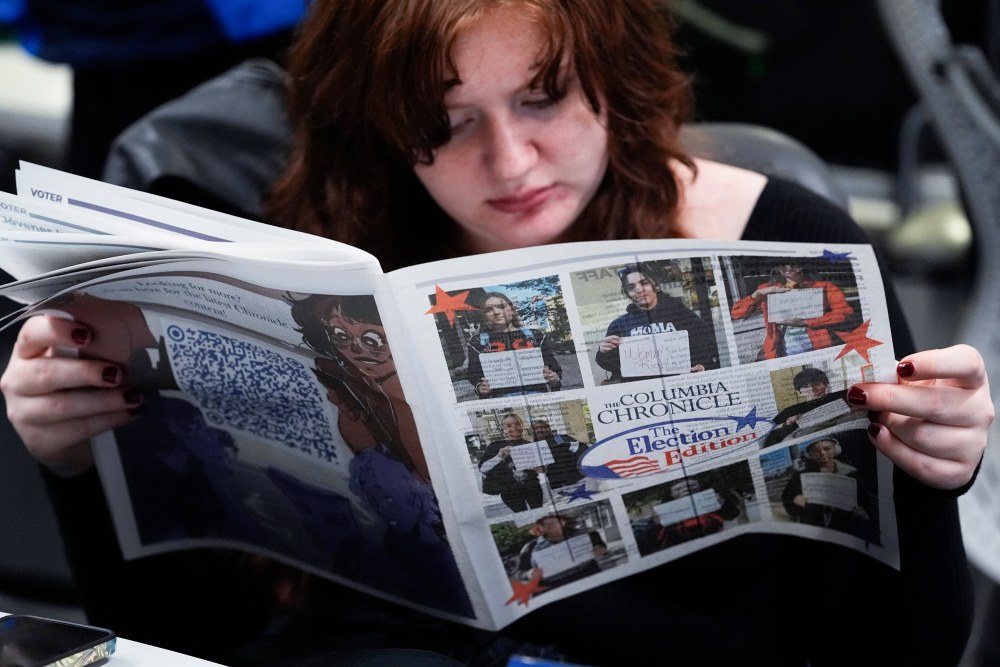
When teens in the study were asked for one word to describe today’s news media, 84% chose something negative. Their responses included “biased,” “crazy,” “boring,” “fake,” “bad,” “depressing,” “confusing,” and “scary.” More than half believe journalists routinely take part in unethical behavior, such as inventing quotes, paying sources, or taking photos out of context.
Fewer than one-third think reporters correct mistakes, check facts before publication, or use multiple sources. These practices are standard in reputable journalism but are rarely visible to the public. Experts say teens often mirror the attitudes they hear at home, especially in a political climate where the term “fake news” is used frequently. Many young people do not follow the news regularly or learn in school about the role journalists play in society. High-profile errors and scandals within the industry also reinforce their doubts.
“Some of this attitude is earned, but much of it is based on misperception,” said Peter Adams of the News Literacy Project. There are ways to improve trust, but doing so will require time and engagement. Many students rely on social media for information, said Lily Ogburn, a senior at Northwestern University. She noted that many of her classmates do not understand the role of journalism at all, even when her university’s student newspaper exposed hazing and racism in its football program.
“There’s a lot of mistrust toward journalists,” Ogburn said. Still, she remains committed to the field. “I want to be a journalist that people trust, and I want to report news that makes people believe and trust in the media.” The past two decades of financial struggles have also hollowed out newsrooms. Many communities no longer see much legitimate reporting.
Fewer young people encounter journalism through films or television, either. When asked what movies or shows depict journalism, most teens could not name any. Experts like Howard Schneider of SUNY Stony Brook argue that news literacy education can help rebuild trust. He teaches students how to understand where information comes from and how to evaluate it. “The more exposed to news, legitimate news, the more their attitudes turn positive,” he said.
Students who take these courses say they are learning the value of verification. Sixteen-year-old Brianne Boyack said she now double-checks sources and seeks outlets she trusts. Her classmate Rhett MacFarlane used his lessons to fact-check a rumor about the Louvre. “I’ve learned that there is definitely fact-checking,” MacFarlane said. “You guys are professionals, and you have to tell.
READ NEXT
- Jennifer Garner recalls paparazzi ‘knocked over’ children, pursuing photos of her and Ben Affleck
- “I’ll pop a cap in your a—!”: Indiana woman jailed for shooting at dryer repairman
- Oklahoma mother convicted after forcing 11-Year-Old to give birth at home with no medical care
- MAGA complains Trump’s second term is no longer ‘fun’: report
- Florida woman accused of trashing longtime friend’s apartment and threatening to shoot her