

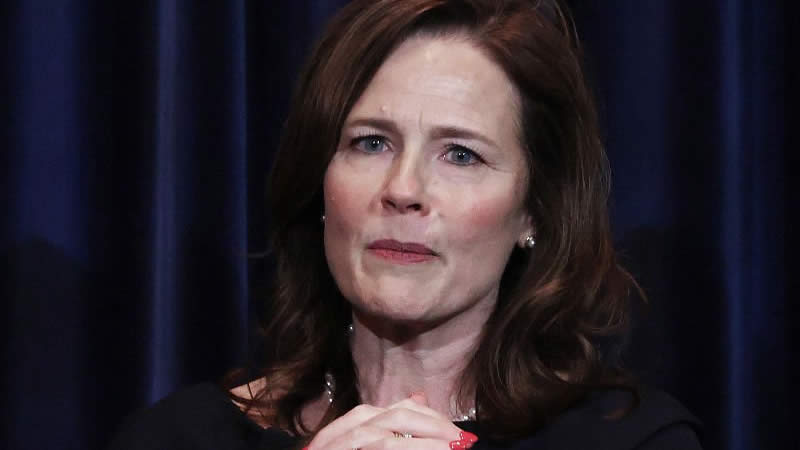
Supreme Court justice Amy Coney Barrett didn’t mince her words when she said it would be “a mess” if Donald Trump’s administration had to cough up billions in tariff refunds. Her comment came as the court wrapped up arguments over whether Trump went too far in using his presidential powers to slap tariffs across the globe.
The case hinges on whether the president stretched the limits of a 1970s law known as the International Emergency Economic Powers Act. It’s supposed to let presidents act fast in emergencies, but critics say Trump used it to dodge Congress and rewrite trade rules on his own.
If the justices side against him, the consequences could be huge. Businesses that paid the disputed tariffs could demand their money back, and that’s no small sum. Reports suggest the government has collected nearly $90 billion in these duties, more than half of America’s total tariff revenue this year, reported CNN.
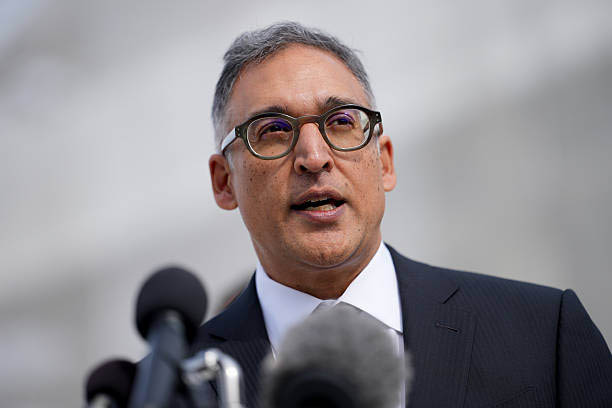
Barrett put the practical issue bluntly as she grilled Neal Katyal, the lawyer for a handful of small businesses challenging the tariffs. “If you win, tell me how the reimbursement process would work.
Would it be a complete mess?” she asked. Katyal admitted, “We don’t deny that it’s difficult,” though he insisted his clients should be refunded if the court rules their way. Barrett pressed him again, to which he conceded it would be “complicated.” Her dry reply summed it up: “So, a mess.”
Throughout the two-and-a-half-hour hearing, several justices seemed uneasy about the way Trump’s team relied on emergency powers meant for national security to impose what looked more like broad economic policy. Katyal argued that the administration had effectively bypassed Congress. “Tariffs are taxes,” he said. “They take dollars from Americans’ pockets and deposit them in the U.S. Treasury. Our founders gave that taxing power to Congress alone.”
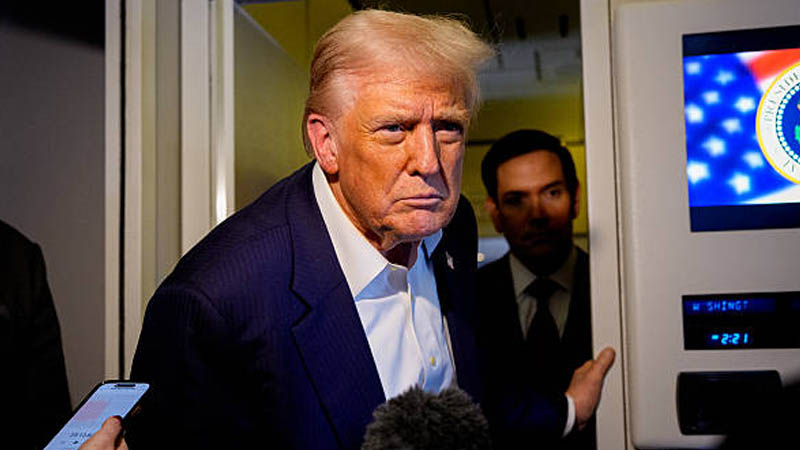
The stakes are political as well as financial. Trump has been publicly defending his actions, calling the case “one of the most important cases in the history of our country.” Speaking to Fox Business, he admitted that if the court rules against him, “we’d have to pay back money.”
The potential refunds could blow a hole in the government’s finances and create chaos for thousands of companies that have adjusted their supply chains and pricing based on the tariffs. Economists say such uncertainty could ripple through global markets, especially given how heavily some industries rely on imported goods.
Legal experts following the case say the justices face a tough balance between respecting presidential authority in foreign affairs and preventing overreach. A ruling against Trump could reshape how future presidents use emergency powers. A win for him, on the other hand, might give the White House far more freedom to impose economic measures without congressional approval.
For now, the court’s decision is expected in the coming months, but Barrett’s candid “mess” remark captured what’s at stake: an enormously tangled web of policy, money and power that could end up costing the US government—and taxpayers—tens of billions.