

A new survey by the Public Religion Research Institute (PRRI) suggests that more than half of Americans see President Donald Trump as a threat to democracy, describing him as a “dangerous dictator.”
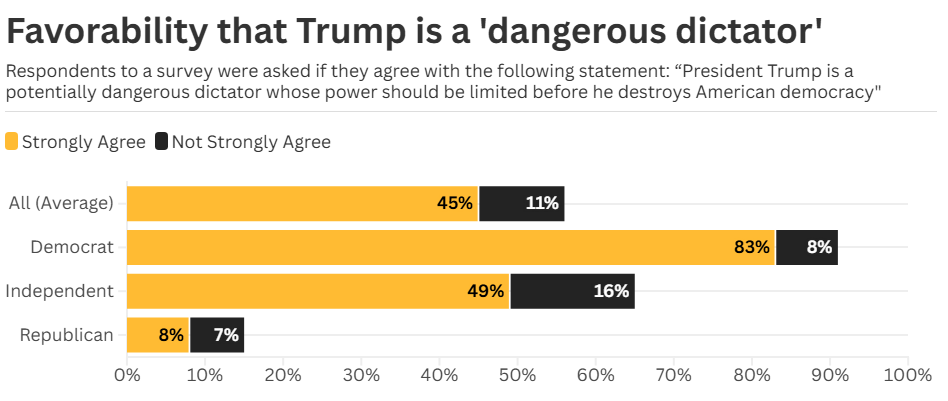
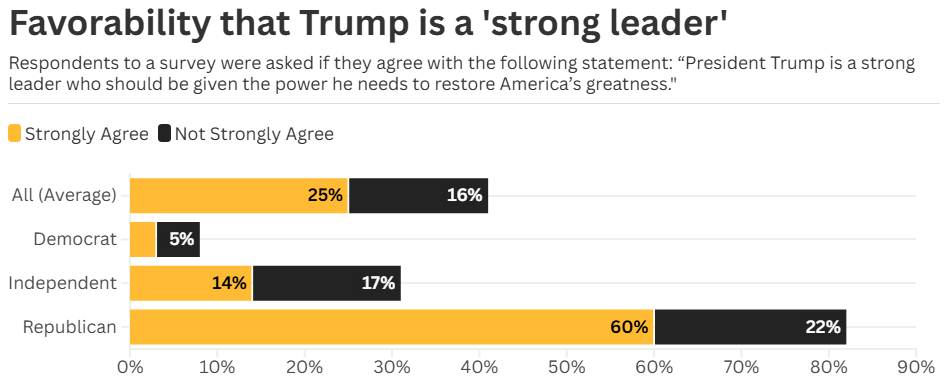
According to the poll, 56% of voters agreed with the statement, “President Trump is a dangerous dictator whose power should be limited before he destroys American democracy.” In contrast, 41% said they believe “President Trump is a strong leader who should be given the power he needs to restore America’s greatness.”
The political divide was sharp. A massive 91% of Democrats and 65% of independents sided with the first statement, while 82% of Republicans backed the second, viewing Trump as the strong leader America needs.
Religion also played a major role in shaping opinions. The survey found that 73% of white evangelicals, 54% of white Protestants, and 55% of white Catholics saw Trump as a “strong leader.” On the other hand, non-white Christians and members of other religious groups mostly described him as a “dangerous dictator.”
The findings highlight the deep polarization still gripping the country years after Trump’s presidency. The PRRI report noted that “Americans remain pessimistic about the country’s direction and the state of the country.” That feeling of national unease seems widespread, with 62% of voters saying they believe things in the U.S. are headed in the wrong direction.
The survey, which included 5,543 adults across all 50 states, was conducted online between August 15 and September 8.
PRRI’s results come as Trump continues to dominate headlines, courtrooms, and campaign trails, leaving the public sharply split between those who see him as the only one capable of fixing the country and those who fear he could tear it apart.
While the poll doesn’t predict what’s next, it paints a clear picture of a nation struggling to agree on what leadership — and democracy — really mean in 2025.
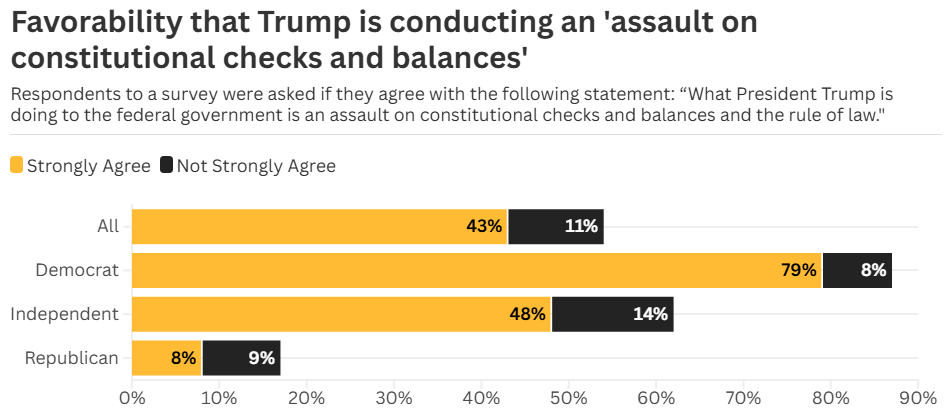
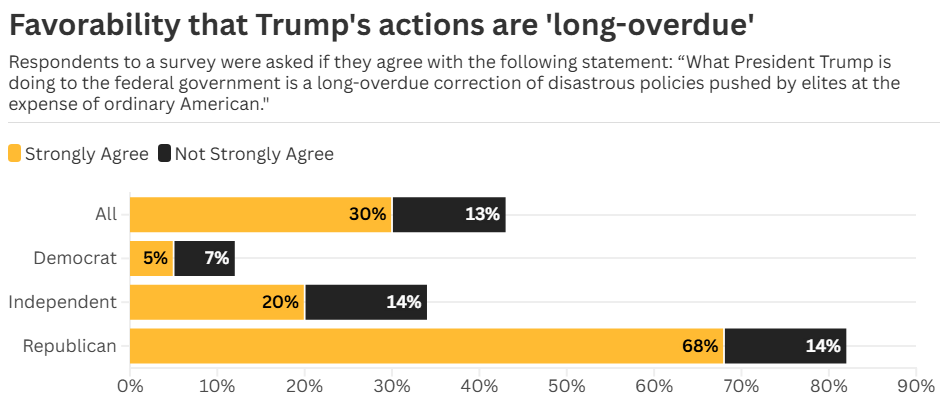
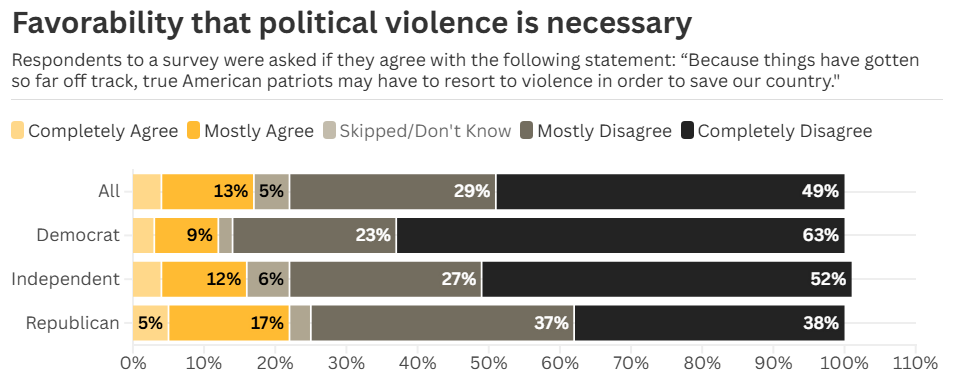
The CBS News/YouGov poll found that 86% of Americans viewed using violence to achieve political goals as unacceptable. Meanwhile, an NPR/PBS News/Marist poll found that while most people considered political violence to be unnecessary, the average number of people who viewed it as necessary grew from 20% to 30%.
The New York Times cautioned its readers against putting too much faith in polling numbers, as what’s considered political violence varies from person to person, and the timing and justification of such violence are subject to respondents’ varying perspectives. The newspaper doesn’t ask people’s opinions about political violence in any of its polls.