

A federal judge in Chicago has temporarily blocked President Donald Trump’s plan to deploy hundreds of National Guard troops to Illinois, marking the second major legal setback to his efforts to send military personnel into Democratic-led cities.
U.S. District Judge April Perry issued the ruling on Thursday after hearing more than two hours of arguments from lawyers representing both the federal government and the state of Illinois. Perry said allowing the Guard’s deployment would “only add fuel to the fire,” referring to ongoing protests at a federal immigration facility near Chicago.
The decision comes just five days after another federal judge blocked a similar deployment in Portland, Oregon. Meanwhile, a three-judge federal appeals panel in San Francisco signaled it may overturn that Portland ruling, potentially clearing the way for troops to enter the city.
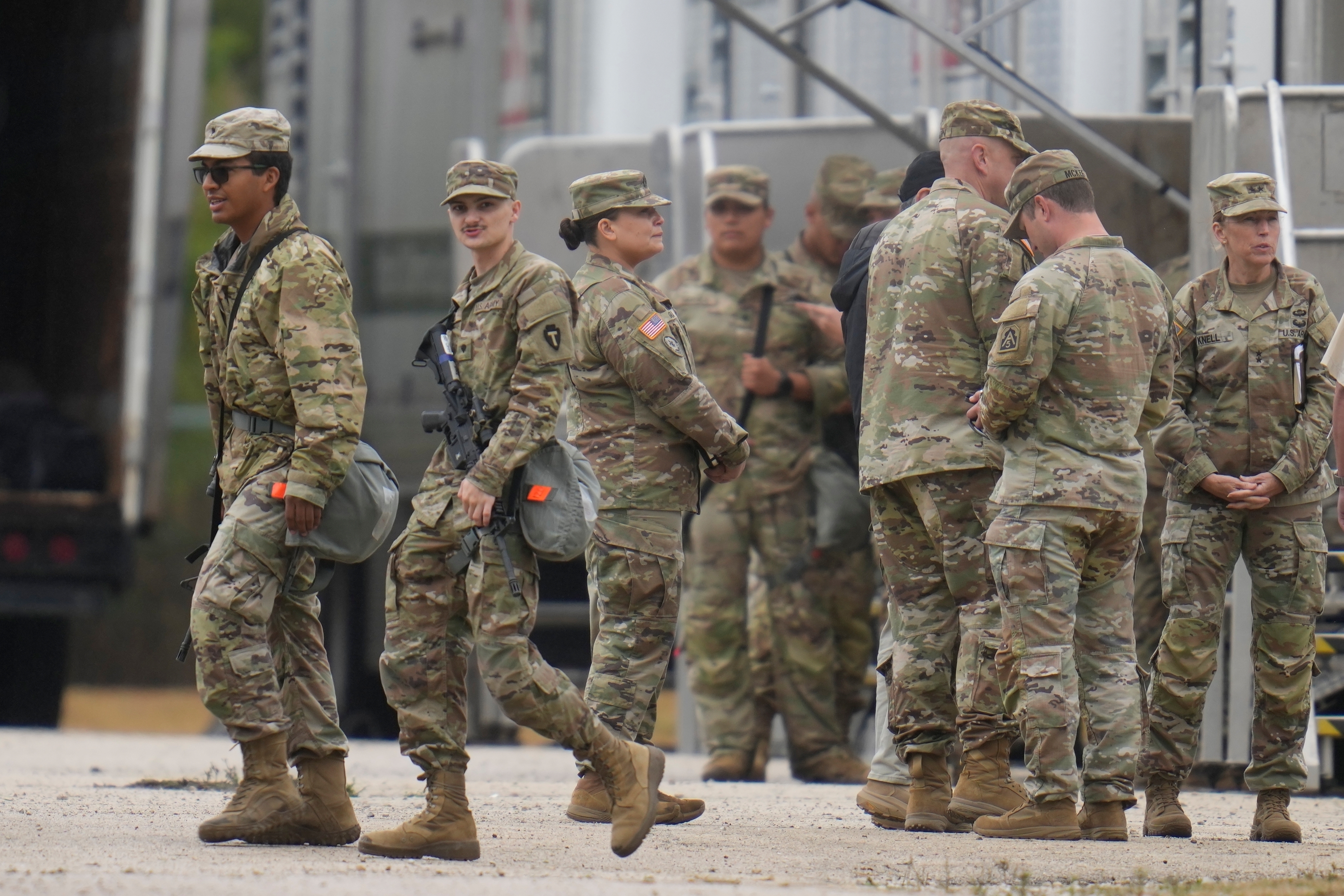
(Erin Hooley / AP)
Both cases are viewed as critical tests of Trump’s authority to send military forces into U.S. cities over objections from state leaders. The president has justified the deployments as necessary to protect federal property and officers from what he calls “violent agitators,” while Democratic governors and mayors argue he is overstating threats to score political points.
In her decision, Judge Perry said she found little evidence supporting federal claims of widespread violence at the Immigration and Customs Enforcement (ICE) facility in Broadview, Illinois, where small groups of protesters have gathered for weeks. She noted that another federal judge in Chicago issued an order the same day restricting federal agents from using force to disperse demonstrators and journalists at the site.
“The behavior of U.S. Immigration and Customs Enforcement officers has prompted the protests,” Perry wrote. Deploying troops, she said, would “only add fuel to the fire that defendants themselves have started.” Her order will remain in effect until at least October 23.
The White House quickly announced plans to appeal. “President Trump will not turn a blind eye to the lawlessness plaguing American cities, and we expect to be vindicated by a higher court,” said spokesperson Abigail Jackson.
Illinois Governor J.B. Pritzker welcomed the decision, saying, “Donald Trump is not a king — and his administration is not above the law. There is no credible evidence of a rebellion in the state of Illinois, and no place for the National Guard in the streets of American cities like Chicago.”
The controversy highlights the broader constitutional tension over federal authority versus states’ rights. Trump has previously deployed troops to Washington, D.C., Los Angeles, and Memphis, and has hinted at expanding those operations. “We’re in Memphis. We’re going to Chicago. We’re going to other cities,” he told reporters Thursday, calling the National Guard “a very powerful force.”
The administration is appealing similar rulings in California, where a court previously found Trump’s summer deployment of troops in Los Angeles unlawful.