

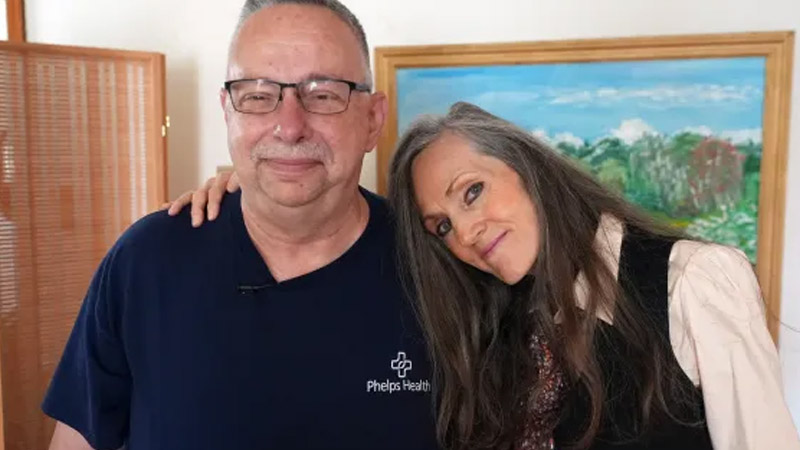
Regina Young was struggling with chronic fatigue, anxiety, and a worsening panic disorder that left her trapped inside her home, unable to care for herself or even eat properly, when help arrived at her door.
The visit came from paramedic Keith Grayson, who works with a Medicaid-funded home-care program run by Phelps Health in Rolla, Missouri, about 100 miles southwest of St. Louis. Young believes the program saved her life.
The service is designed to fill gaps in rural healthcare, where patients often have limited access to doctors, transportation, and regular treatment. But residents and providers now fear programs could disappear under the $1 trillion in Medicaid cuts included in President Donald Trump’s sweeping budget bill, passed nearly a year ago.
By 2034, the legislation could lead to 7.5 million people losing Medicaid coverage, while another 2.1 million could lose coverage through marketplace plans, according to the nonpartisan Congressional Budget Office.
Trump won Missouri with nearly 60% of the vote in November 2024. In Phelps County, where almost one in five residents live below the poverty line, he received more than 70% of the vote. But nearly a year after the bill was signed, some Republican voters in the area say they feel abandoned.
“What’s wrong right now is the way Trump is treating us poor people,” said Leslie Luttrell, another client of the Phelps paramedicine program. The president, she said, was born with a “gold spoon in his mouth.”
Luttrell said rising costs have made daily life harder. Inflation rose in May to 4.2%, the highest level in three years. Medicaid and CHIP enrollment has also fallen nationwide, dropping 21% from 94.5 million in March 2023 to 74.9 million in February 2026, according to KFF.
“A year ago, it was pretty good. It was better than what it is now,” Luttrell said. “It’s harder to buy shampoo, conditioner, body wash and female items.”
Missouri received more than $216 million from Trump’s spending bill to rebuild rural healthcare hubs and test new care models, including funding for much of the Phelps Health paramedicine program. Michael Gruenberg, director of Phelps Health’s ambulance services and creator of the program, said home visits are not short-term fixes but long-term solutions to serious healthcare problems in rural communities.
The concern comes as rural hospitals face mounting financial pressure. More than 700 rural hospitals nationwide, or about one-third of all rural hospitals, are at risk of closing, according to the Center for Healthcare Quality and Payment Reform. In Missouri, 28 rural hospitals, about half the state’s total, are at risk.
Fitzgibbon Hospital and The Living Center, which have served Missourians for more than a century, filed for bankruptcy in April. In court filings, the hospital said rural providers had been operating on the financial edge for years and warned that Medicaid reductions from the “One Big Beautiful Bill Act” could further “destabilize an already fragile system.”
Still, U.S. Rep. Jason Smith, whose district includes Rolla and who is running for re-election, has praised the bill’s $50 billion investment in rural communities. “Missouri is the definitive example of the rural setting my Republican colleagues and I had in mind,” Smith wrote in a letter to federal health agency leaders.