

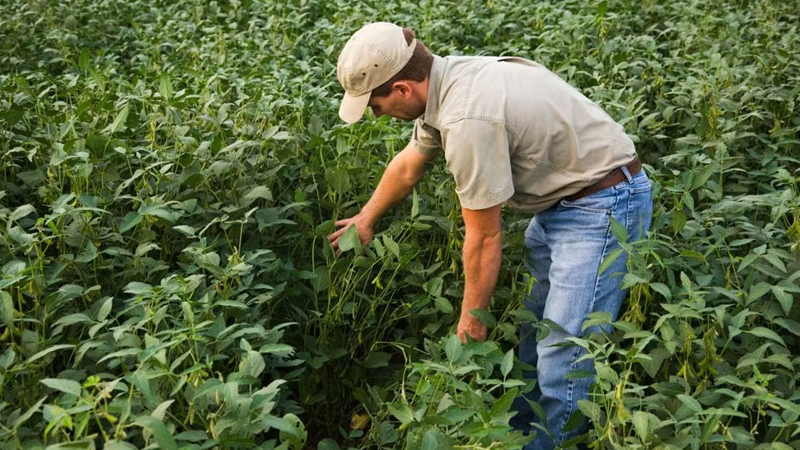
Farmers and pilots across northeast Louisiana are grappling with soaring costs tied to the war in Iran, as fuel and fertilizer prices swing wildly, squeezing already thin margins.
Agriculture pilot Reed Keahey, who sprays crops from the air, relies on kerosene-based Jet-A fuel for his plane. Prices for the fuel have spiked since the war began, jumping from $2.46 a gallon in February to a peak of $4.11 in May.
Keahey typically purchases 7,500 gallons at a time, meaning the price surge translated into massive jumps in his operating costs. He said that when fuel hit its peak, one fuel run cost him a little more than $30,000. As of this week, the price had eased to $3.18 a gallon, though it was climbing again.
“It puts a squeeze, but I can’t let my farmers feel that squeeze that it’s putting on me,” Keahey told CBS News. The pressure extends beyond fuel. David and Theresa Guererro, who run a farming operation, depend on a nitrogen fertilizer called urea to grow their corn crops.
Nearly half of the world’s urea exports come from the Persian Gulf, a region gripped by shipping disruptions caused by intermittent closures of the Strait of Hormuz during the conflict. The strait, a critical passageway for global trade, also handles roughly 20% of the world’s oil supply.
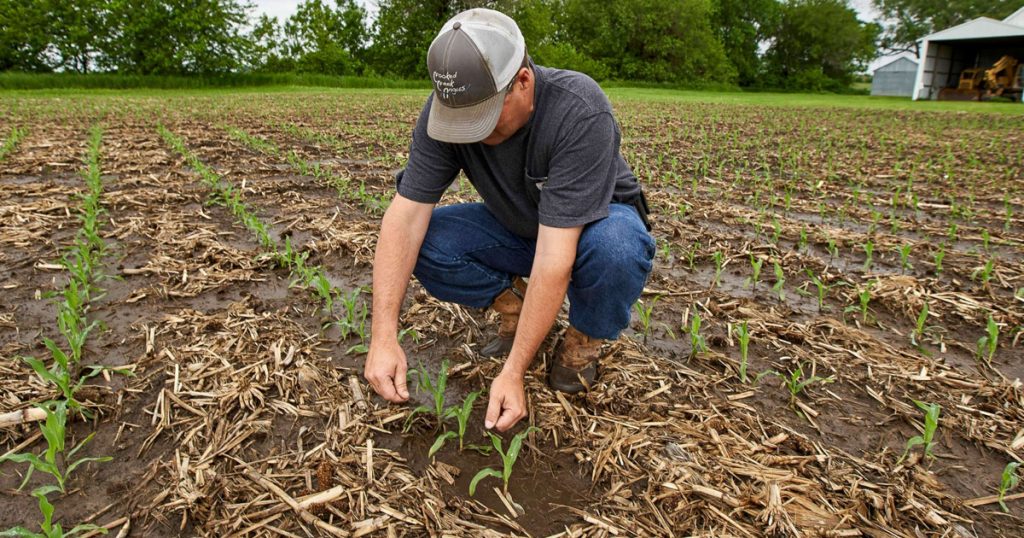
Urea prices spiked sharply during the war, and the Guererros said the increase had completely wiped out their fertilizer budget. The couple disclosed they are now over budget on urea by an estimated $120,000 to $130,000. Asked whether their farm would survive the cost increases, David Guererro was blunt.
“It’s close, it’s real close,” he said. The financial strain reflects a broader trend in American agriculture. According to the American Farm Bureau Federation, U.S. farm bankruptcies rose 46% last year compared to 2024, underscoring how vulnerable the industry has become to global supply shocks and price volatility.
Keahey said he could pass his rising fuel costs on to farmers like the Guererros by raising his own prices. Instead, he’s choosing to absorb the loss himself, recognizing that his business depends on theirs. “Right now, it’s a game of survival,” Keahey said. “… If the farmers aren’t in business, then I’m not in business.”
The situation illustrates how interconnected global conflicts can ripple down to local economies, linking a war thousands of miles away to the day-to-day survival of family farms in rural Louisiana.