

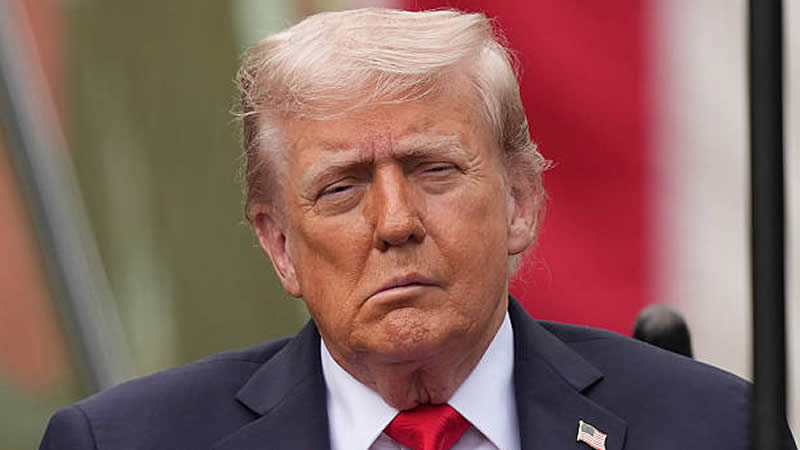
The story of America’s manufacturing comeback is starting to look pretty shaky. Last spring, President Donald Trump talked up his tariff-heavy strategy and promised it would spark a wave of reshored factory jobs. Fast forward eight months, and the numbers are telling a very different story.
The latest report from the Bureau of Labor Statistics shows that while the overall job market added 119,000 nonfarm jobs, manufacturing actually slipped by another 6,000 positions. That drop pushed total factory losses to about 59,000 since Trump first vowed to reignite domestic production. It lines up with the Institute for Supply Management’s November report, which marked the eighth straight month of shrinkage in manufacturing employment.
Read Also: “Overwhelming Evidence” Bank of America Says Trump’s Tariffs Are Fueling Inflation
Economic commentator Joseph Politano summed it up bluntly in a LinkedIn post last week, writing, “The US is losing blue-collar jobs for the first time since the pandemic…as manufacturing industries lose jobs at a rapid pace while growth in construction & transportation has nearly zeroed out.”
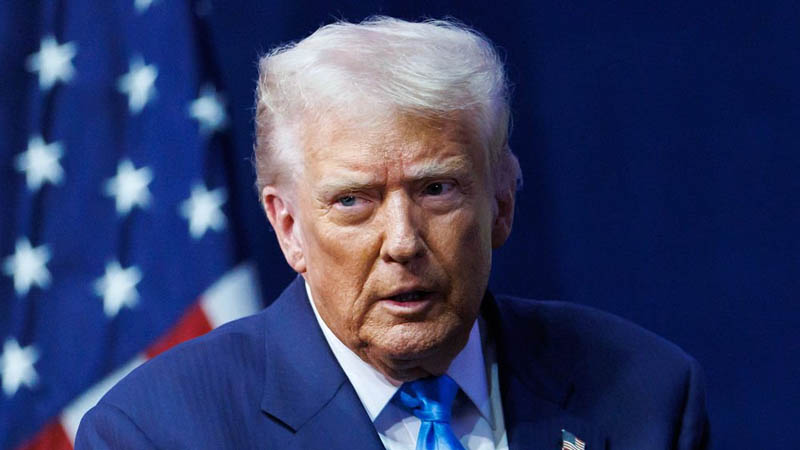
Blue-collar work has been a lifeline for a lot of people in a rough job market, especially younger workers and folks coming out of office roles. So the slowdown hits harder than it might have a few years ago. And according to economists, part of the slump traces back to the very tariffs that were meant to boost manufacturing in the first place.
Laura Ullrich, director of economic research at the Indeed Hiring Lab, told Fortune, “It is striking how soft manufacturing has been because in theory, you put tariffs in place to protect domestic manufacturing, so that domestic manufacturing employment grows. And we have seen the opposite of that.”
Read Also: “Tariffs Are Taxes”: Supreme Court Exposes the Real Cost of Trump’s Trade Strategy
Ullrich says the uncertainty around tariffs has made companies hesitate on hiring. Analysts at Pantheon Macroeconomics have made similar points, noting that firms hit with higher costs often trim labor expenses to protect profits. Ullrich added, “Oftentimes when there is heightened uncertainty, it’s just difficult for businesses and people to make decisions in real time. And so that slows down employment.
It slows down all those processes.” The situation isn’t entirely simple. Ullrich pointed to Indeed data showing that while manufacturing has contracted, job postings have held up better than expected. Some employers still can’t find enough qualified workers. “Some of the declines in blue-collar employment could be about labor demand going down,” she said. “But it also could be about labor supply shortages and a mismatch between the jobs that are available and the skills that people have to fill those jobs.”

That mismatch is real. Ford CEO Jim Farley recently said the company has 5,000 open mechanic jobs, some paying $120,000, that it can’t fill. A 2024 Manufacturing Institute and Deloitte survey found that more than 65 percent of companies say hiring and keeping workers is their biggest challenge.
Despite today’s slowdown, trade careers are far from fading. Trade school enrollment is rising, and many young people still see a solid future in hands-on work. As Portland Community College welding instructor Matt Scott put it to KATU, “More kids are realizing they can go out and earn a great living with an amazing career and making very good money.”
READ NEXT
- Florida mom busted for DUI after cops spot 5-year-old dangling out car window
- Miley Cyrus opens up about final conversation with godmother Dolly Parton before her death
- Indiana woman sentenced to 33 years for killing 17-month-old who wouldn’t stop crying
- Scott and Kelley Wolf confirm divorce after months of family healing
- Toddler found wandering Marietta streets after caregiver allegedly took 2 hours to raise alarm