

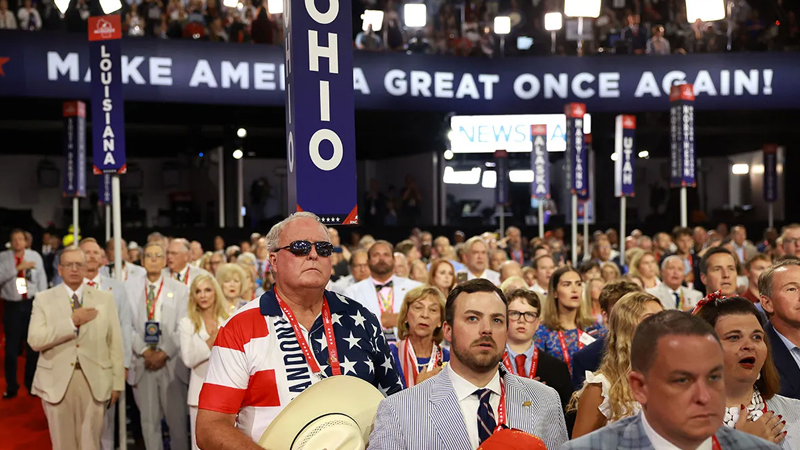
In recent weeks, multiple Republican figures have broken ranks with President Donald Trump, signaling potential shifts in the GOP’s landscape ahead of the crucial 2026 midterm elections. These fractures have been apparent in key policy areas, such as redistricting, federal labor laws, and the handling of the Jeffrey Epstein files, suggesting a growing divergence within the party.
“These fractures are indeed significant,” said Christopher Cooper, a political professor at Western Carolina University. He explained to Newsweek that the discord within the GOP is reflective of realigning loyalties and strategic shifts as Trump works to solidify his influence ahead of the 2026 elections. As various members of the GOP question his control, the moves against Trump’s agenda signal cracks in the party’s unified front.
While Trump remains the leader of the Republican Party, Cooper noted that “it appears that his word is no longer the absolute law of the land for nearly all Republicans.” The pushback from various Republican factions could foreshadow deeper rifts, especially as the 2026 elections approach.
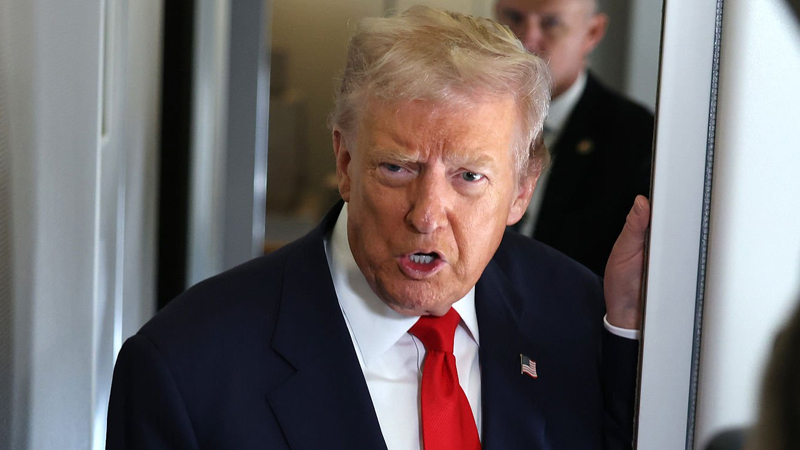
However, Jeremy Walling, a political professor at Southeast Missouri State University, cautioned against writing off Trump too soon. “It might be too early to say that Trump is entering the lame duck period of his presidency,” Walling said. He acknowledged the possibility of Trump’s decline in influence but warned that “underestimating President Trump is often followed by yet another resurgence and comeback.” Still, Walling did note that “these types of pockets of resistance are accumulating,” indicating that his grip on the party may be weakening.
One of the more visible signs of dissent occurred in Indiana, where a majority of Republican state senators voted against a redistricting proposal backed by Trump. The plan, designed to ensure Republicans held all nine of Indiana’s congressional seats, was soundly defeated by a 19-31 vote. Twenty-one Republicans broke with Trump on this issue, despite the president’s personal lobbying efforts and his threats of primary challenges against dissenting lawmakers.
Trump, responding to the setback, stated that it “would have been nice” if the Indiana Senate had moved forward with the redistricting plan but downplayed his involvement, claiming he “wasn’t working on it very hard.”
The conflict over the redistricting map mirrors a similar situation in Washington, where House Republicans voted with Democrats to overturn Trump’s executive order that limited collective bargaining rights for federal employees. The order, signed in March, had restricted bargaining rights for certain federal agencies involved in national security, a move Trump argued was necessary for “national security requirements.” While the bill’s passage in the House is a blow to Trump, it still requires Senate approval to take effect.
Perhaps the most striking in-party fracture for Trump has been the handling of the Jeffrey Epstein files. Several Republican House members, including Thomas Massie, Marjorie Taylor Greene, Nancy Mace, and Lauren Boebert, joined Democrats in pushing for the public release of documents related to Epstein, signaling a break from the president’s stance.
White House spokesperson Abigail Jackson, in response to this dissent, reiterated Trump’s commitment to transparency, stating that the administration had done more for Epstein’s victims than the Democrats. Nevertheless, Greene, once one of Trump’s closest allies, expressed her frustration with the party and the president, saying that standing up for the victims of Epstein should not result in threats or political backlash.
Another point of contention for Trump within his MAGA base has been the U.S. support for Israel. Figures such as Greene, Tucker Carlson, Candace Owens, and Matt Gaetz have voiced opposition to what they view as “endless foreign entanglements,” challenging the traditionally strong GOP-Israel alliance. Law professor Faisal Kutty observed that this growing populist backlash could have serious implications for U.S. foreign policy and the GOP’s direction.
Thomas Gift, a political scientist at University College London, noted that “Republicans have started to break from parts of Trump’s agenda.” While this dissent doesn’t amount to a full-scale rebellion, Gift emphasized that it’s a troubling sign for Trump as he heads into the 2026 elections. He warned that if Republicans lose control of the House, it could lead to investigations that threaten Trump’s political future.

As for the path forward, Cooper suggested that Republican candidates would still seek Trump’s endorsement in contentious primaries, but the willingness of some Republicans to break from him could change the dynamics of the GOP. The months leading up to the 2026 elections will likely determine whether Trump retains his iron grip over the party or if these dissenting voices reshape its future.
READ NEXT
- 14-year-old Florida girl survives shark attack after losing arm and leg
- Seann William Scott says his daughter may be “horrified” when she finally watches American Pie
- Chelsea Handler says property she bought from RFK Jr. and Cheryl Hines came with problems
- Farmers dressing as bears to try to scare off potato-eating monkeys
- Jeff Shell lawsuit reveals private conversations between Larry Ellison and President Trump