

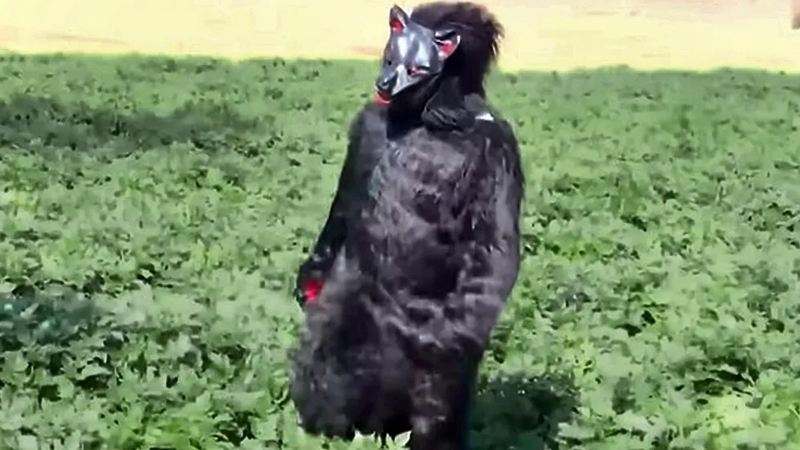
Farmers in parts of northern India are resorting to an unusual tactic to protect their crops: dressing up as bears to scare away hungry monkeys that have been raiding their fields and homes.
In Sambhal district in the northern state of Uttar Pradesh, farmers say troops of monkeys have been destroying potato and strawberry harvests. The animals have reportedly become so bold that they sometimes enter houses in search of food, even opening refrigerators.
Before turning to costumes, villagers tried several traditional methods to drive the animals away. Farmers chased the monkeys with brooms, beat drums and metal pans to make loud noises, and set up scarecrows around their crops. However, these efforts proved largely ineffective.
Even local wildlife officials were unable to solve the problem, leaving farmers to experiment with other solutions. Eventually, some farmers came up with a creative plan: buying bear costumes and wearing them while patrolling their fields. The idea was based on the belief that monkeys naturally fear bears.
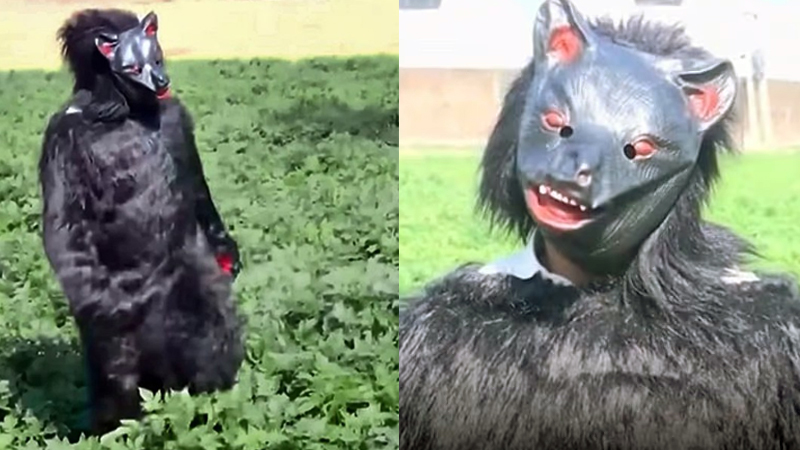
According to local reports, the tactic worked surprisingly well at first. When farmers dressed as bears and growled or moved toward the animals, groups of monkeys quickly scattered and avoided the fields, according to The Times.
Still, experts and observers say the strategy may only provide temporary relief. The root causes of the problem remain unresolved, including the increasing interaction between humans and wildlife.
In many parts of India, monkeys are regularly fed by people for religious reasons. In Hindu belief, the monkey god Hanuman is associated with strength and good fortune, leading many devotees to offer food to monkeys. This practice encourages the animals to stay close to human settlements.
Environmental changes have also played a role. Deforestation and urban expansion have reduced natural food sources for monkeys, forcing them to venture into farms and cities in search of food. Residents in large cities are also familiar with the problem. Ratna Aggarwal, a homeowner in Delhi, described the damage caused by monkeys that visited her property.
“They smashed our water pipes, broke the water tank on the roof, and smashed our pot plants. When I waved a stick at them, they snarled back.” In some Delhi neighbourhoods, authorities have previously hired people to wear costumes resembling langur monkeys, a larger species known to scare away the smaller rhesus monkeys responsible for many raids.
Real langur monkeys were once used to chase away their smaller cousins, but that practice ended in 2012 after wildlife protection laws banning the captivity of langurs were strictly enforced.
Meanwhile, farmers in India are also facing challenges from another animal: cattle. Because cows are considered sacred in Hindu culture and slaughter is banned in most states, abandoned cattle often roam freely and wander into farmland in search of food.
Munidev Tyagi, a farmer from Sahibpur village in Uttar Pradesh, described the growing strain on rural families. “Sometimes there are so many cows, I can’t cope on my own and my wife and children have to join me.”
READ NEXT
- Florida mom busted for DUI after cops spot 5-year-old dangling out car window
- Miley Cyrus opens up about final conversation with godmother Dolly Parton before her death
- Indiana woman sentenced to 33 years for killing 17-month-old who wouldn’t stop crying
- Scott and Kelley Wolf confirm divorce after months of family healing
- Toddler found wandering Marietta streets after caregiver allegedly took 2 hours to raise alarm