

Data journalist and pollster Richard Baris said Saturday that before the United States launched its unprecedented attack on Iran, the Trump administration looked closely at polling about how much risk Americans were willing to tolerate.
According to Baris, the findings were blunt and unsettling for some of Trump’s most loyal supporters.
“Polling reviewed by the administration asked how many American casualties voters were willing to accept in a war with Iran,” Baris wrote in a social media post on X, several hours after President Donald Trump had authorized strikes on Iran.
“The answer was ZERO. Americans demanded ZERO casualties because Americans did NOT support a war. That’s how stupid this was.”
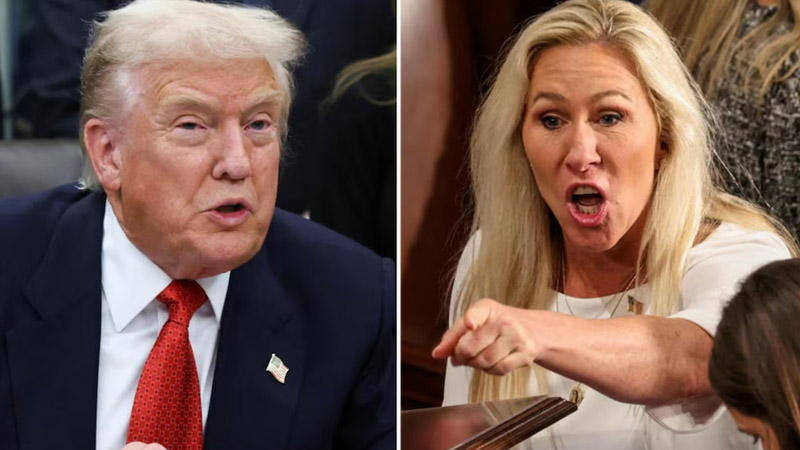
That claim quickly stirred reaction within MAGA circles. Marjorie Taylor Greene, the former Republican member of Congress from Georgia and a longtime Trump ally, said the idea that the administration weighed acceptable losses ran directly against what she believed the movement stood for.
“The Trump admin actually asked in a poll how many casualties voters were willing to accept in a war with Iran???” Greene wrote Saturday in a social media post on X. “How about ZERO you bunch of sick f—— liars. We voted for America First and ZERO wars.”
The timing of Baris’s statement added to the tension, coming just hours after Trump authorized strikes that escalated the conflict with Iran.
Meanwhile, efforts are already taking shape to stop the military campaign, known as Operation Epic Fury. Lawmakers from both parties are backing a War Powers Resolution, a legislative step designed to limit the president’s authority to engage in military conflict without congressional approval.
The push suggests growing unease in Washington as well as among parts of Trump’s political base. Some Republicans, along with Democrats, are now aligning around the effort to curb the operation before it expands further.
Baris, who serves as editor at People’s Pundit Daily and director of Big Data Poll, has built a reputation among some analysts for producing one of the most accurate polls ahead of the 2024 presidential election.
His latest claim, though, has ignited a new debate about how public opinion may have been weighed in the lead up to a major military decision and whether the findings were at odds with the course that was ultimately taken.