

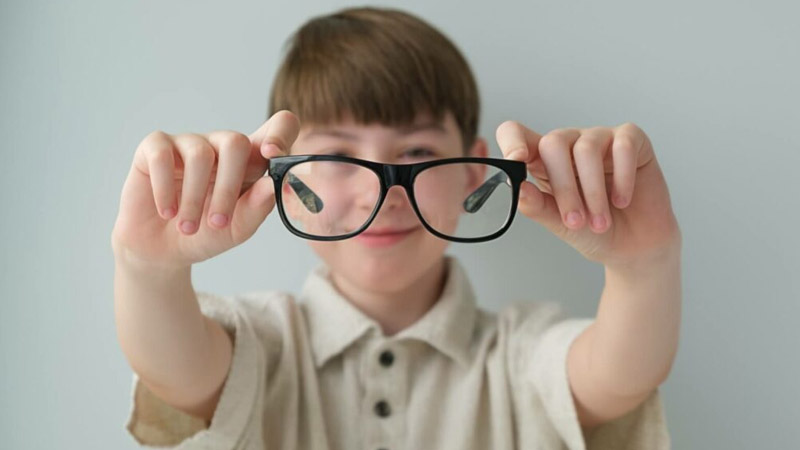
For many children, getting their first pair of glasses is a familiar childhood milestone. It marks the beginning of regular eye exams and a lifetime of vision care. But new technology now offers more than clearer sight. It may help protect long-term eye health and reduce the risk of serious vision problems later in life.
A newly approved type of lens, cleared by the Food and Drug Administration in September, is being introduced across the United States after years of use in Europe, Asia, and other parts of the world. The lens represents a shift in how doctors may treat childhood myopia, or nearsightedness.
Myopia is a condition in which children can see objects clearly up close but struggle to see things at a distance. Items far away may appear blurry or difficult to distinguish. Rates of myopia have been rising worldwide. Researchers link this trend to increased time spent indoors and more time looking at screens, books, and other close-range objects.

In the United States, an estimated 30% to 40% of children will develop myopia by the time they graduate from high school, according to Dr. Michael Repka, professor and pediatric ophthalmologist at the Johns Hopkins School of Medicine. Until recently, treatment options were limited.
“It was typically and simply ‘Your child needs to wear glasses, and they’ll live with it,’” Repka said. “‘It will be lifelong, and it will likely get worse over the next few years.’” The newly approved glasses, sold under the brand Essilor Stellest, are cleared for use in children ages 6 to 12.
The FDA based its approval on company data showing a 70% reduction in the progression of myopia among children who wore the lenses for two years. Myopia gradually causes the eye to elongate, which worsens vision over time and raises the risk of retinal tears. The retina is the light-sensitive layer at the back of the eye and is essential for clear vision. As the eye stretches, the chances of developing severe complications increase.
The Stellest lenses use 11 concentric rings containing tiny raised dots to redirect light onto the retina. This approach is believed to help slow the elongation of the eye. “Whether this hypothesis is ultimately proven to be true, of course, matters only in part,” Repka said, noting that the lenses appear effective regardless of the exact mechanism.
In the company’s study, children wearing the lenses showed a 50% reduction in eye lengthening over two years. Researchers around the world, including teams in the United States, are now conducting independent studies to verify the findings.
Ophthalmologists say slowing myopia could help reduce long-term risks such as cataracts, glaucoma, and retinal detachment, conditions that can lead to permanent vision loss. “Now we have a way to slow that down, and maybe we can prevent kids from having that really elongated eye that puts them at risk for blindness,” said Dr. Rupa Wong, a pediatric ophthalmologist in Honolulu.
The suggested retail price for the lenses is $450, according to EssilorLuxottica. Major vision insurance providers in the U.S. are expected to cover them for eligible children. The only other FDA-approved product designed to slow myopia progression is MiSight, a daily disposable contact lens approved in 2019 for children ages 8 to 12. But many families prefer glasses.
“A lot of people might be hesitant to put a child as young as 8 in contact lenses, so the glasses offer a really nice alternative,” Gupta said. Some doctors prescribe medicated eye drops to slow myopia, though these are not FDA-approved for that use.
Under the FDA’s decision, any child within the approved age range who has myopia can be prescribed the lenses. According to the FDA, no serious side effects were reported, though some children experienced halos around objects while wearing them.
Repka said more research in U.S. populations may be needed before the lenses see widespread adoption. “I think before it becomes widely used, we will need some data in the United States,” showing similar effectiveness, he said.
READ NEXT
- Wyoming teen shot and killed his mother in the head after arguing over a stolen tablet
- Trump policies and rising costs fuel GOP fears as senators admit they are ‘anxious about the midterms’
- Trump shows frustration as he attacks ‘lowlife’ media calling them ‘sick and demented’ over Iran war coverage
- Dallas Police Kill Man Linked to Rep. Jasmine Crockett During Armed Standoff
- Trump calls reporter ‘rotten’ after she questions his 2020 election fraud claims